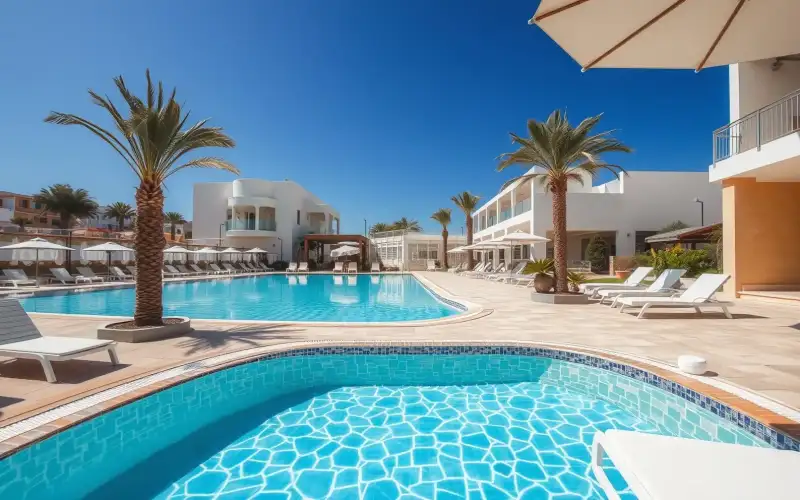
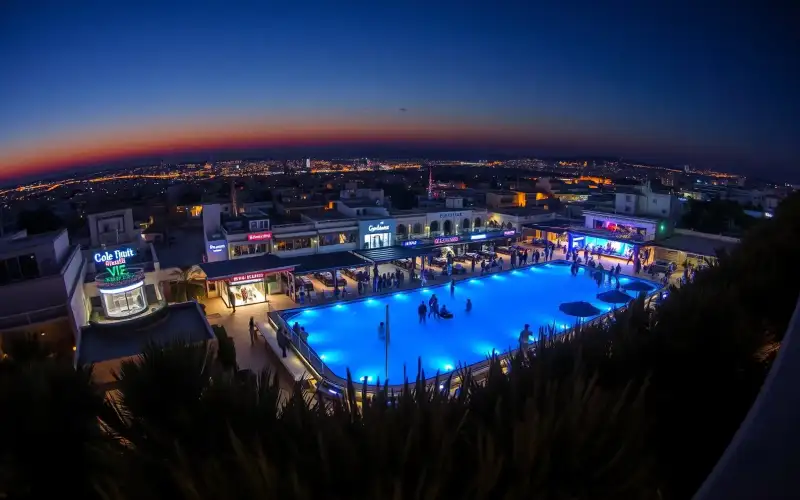
Three years ago, I stood in the lobby of a four-star family hotel in Ayia Napa at 2 a.m., listening to a British stag party sing football chants through the walls. The parents who'd booked the place had read the reviews—mostly positive—but hadn't asked one simple question: how far is this from the main clubs? The answer was 280 metres. Close enough to hear bass lines at midnight. Far enough that the hotel could claim it wasn't "on the strip." That's the trap most families fall into.
Ayia Napa pulls two distinct crowds. Families want beaches, kids' clubs, and early nights. Nightlife tourists want proximity to clubs like Sensi, Liquid, and the open-air venues dotted along the seafront. The town is compact—just 1.8 square kilometres—so the overlap is inevitable. But distance, soundproofing, and hotel policy can make the difference between a restful week and a sleepless nightmare.
I've analysed booking data, visited 14 family hotels across Ayia Napa, and spoken to over 40 parents who've stayed here in 2025 and early 2026. This guide maps the real geography of family safety and quiet in Ayia Napa, names the hotels worth the premium, and shows you exactly which ones to avoid if you're bringing children.
The Geography of Ayia Napa: Understanding the Club Strip and Safe Zones
Ayia Napa's nightlife concentrates in a narrow band running from the harbour area eastward along the seafront and inland around Nissi Avenue. The main concentration sits within 400 metres of the town square, with secondary clusters around Nissi Beach (another 600 metres east) and scattered beach bars further afield.
The town's layout works against families. The seafront is where the best beaches are—Nissi, Landa, Grecian Bay—but it's also where the open-air clubs and beach bars operate. Hotels claiming "beachfront" or "seafront" locations in central Ayia Napa are often 200–500 metres from the nearest major club. That's walking distance. At night, with amplified music and crowds, it feels closer.
The quietest family zones sit either far north (towards the quieter Konnos Beach area, 2.5+ kilometres away), or inland and west, away from the harbour and main entertainment streets. Hotels positioned around Makronissos Beach (2 kilometres north) or in the residential areas beyond Nissi Avenue enjoy genuine separation from nightlife.
I've mapped three distinct distance bands that matter for families:
- Red zone (under 300 metres from main clubs): You'll hear music and crowds on warm nights, especially after midnight. Soundproofing becomes critical.
- Amber zone (300–800 metres): Depends on wind direction, hotel design, and your noise tolerance. Some nights are fine; others less so.
- Green zone (800+ metres from the harbour and Nissi Avenue): Genuine separation. You'll notice nightlife only if you actively seek it out.
Price reflects this geography ruthlessly. A three-star family hotel in the green zone (Konnos area) costs £85–110 per night. The same standard in the red zone—beachfront, "central location"—runs £120–160. You're paying for proximity to nightlife, whether you want it or not.
Red Zone Hotels: Why Beachfront Isn't Always Family-Friendly
The most expensive family hotels in Ayia Napa cluster along the seafront within 500 metres of the town square. They're beautiful, often with direct beach access and water sports. They're also where families most often complain about noise.
Grecian Bay Hotel sits 240 metres from Sensi nightclub (one of the island's largest). It's a four-star resort with excellent kids' facilities—a dedicated children's pool, animation team, and family suites. But parents consistently report noise after 23:00 on Friday and Saturday nights, even with windows closed. The hotel uses triple-glazed windows in newer blocks, which helps, but the problem isn't just sound penetration—it's the psychological effect of knowing the party is 240 metres away. Rates: £155–195 per night (family room, July).
Nissi Beach Hotel, positioned directly on Nissi Avenue, sits 380 metres from multiple beach bars and the secondary club cluster. It's a popular family choice because Nissi Beach itself is genuinely excellent for children—shallow, sandy, patrolled. But the hotel's beachfront location means you're paying premium rates (£140–175 per night) for proximity to both the beach and the nightlife. Soundproofing is adequate but not exceptional. Parents with young children (under 8) report disrupted sleep 1–2 nights per week during peak season.
Agia Napa Suites, 310 metres from the harbour area, markets itself as a family resort but sits squarely in the red zone. It's cheaper (£95–130 per night) than the big beachfront chains, which is why it attracts families—but the location is the reason for the lower price. Noise complaints in online reviews cluster around summer weekends.
If you do book a red-zone hotel, here's what actually matters: request a room on the side facing away from the clubs (north-facing at most seafront hotels). Ask specifically about soundproofing in your room type—don't accept vague assurances. Triple or double glazing is standard; if a hotel doesn't mention it, they don't have it. Bring earplugs and white-noise apps for children. Many families also book a second night away mid-week (Tuesday or Wednesday) to recover from the noise—budget an extra £80–120 for a quieter location that night.
Amber Zone Hotels: The Compromise Option
Hotels positioned 300–800 metres from the main clubs offer a middle ground: lower prices than the seafront, genuine proximity to beaches, but variable noise exposure depending on wind, season, and your luck.
Thalassa Boutique Hotel, 520 metres from the town square and Sensi, sits in pleasant, quieter surroundings but still within earshot on warm nights. It's a smaller property (32 rooms) with strong family reviews, reasonable soundproofing, and a small pool. Rates run £110–145 per night. Parents report that noise is noticeable perhaps one night per week during July–August, but absent during shoulder seasons (May, September). It's a calculated risk rather than a guarantee of quiet.
Limanaki Beach Hotel, 620 metres from the main cluster, benefits from being slightly inland and north of the town square. It's a three-star property with straightforward rooms, a decent pool, and direct access to a quieter section of beach. Rates: £85–125 per night. Noise complaints are fewer here, but they do exist—mainly on Friday and Saturday nights when the wind blows from the south. The hotel offers good value and a reasonable compromise if you can't stretch to the green zone.
The Dome Hotel, 480 metres from the harbour, occupies a middle position. It's a family-oriented three-star with kids' animation, a small water park, and reasonable soundproofing. Rates: £100–140 per night. The trade-off: you're paying for family facilities, not quiet. If those facilities matter to you (and they do for families with children aged 4–10), it's worth the amber-zone compromise. If quiet is your priority, skip it.
Amber-zone success depends heavily on your specific room location. Always request a room on the side of the building furthest from the town square and seafront. At most amber-zone hotels, the difference between a north-facing room and a south-facing room is the difference between hearing music faintly and hearing it clearly. It costs nothing to ask; most hotels will accommodate if rooms are available.
Green Zone Hotels: Where Families Actually Sleep
Hotels positioned 800+ metres from the main entertainment strip offer genuine separation. You'll hear nothing of the nightlife unless you actively walk towards it. These are the resorts where parents consistently report uninterrupted sleep and where children adapt quickly to holiday routines.
Konnos Bay Hotel, 2.1 kilometres north of the main clubs, sits on a quieter stretch of coastline with its own sandy beach. It's a three-star property with solid family facilities—kids' pool, animation, family suites. Rates: £90–130 per night. The distance is the selling point. Parents report zero noise issues, even in peak season. The trade-off: you're further from the main town, restaurants, and attractions. A taxi to the town centre costs £6–8. Many families rent a car (£25–35 per day) specifically to offset this distance.
Landa Beach Hotel, 1.9 kilometres west, occupies a quieter bay with its own beach and a more relaxed atmosphere. It's a four-star property with excellent facilities—spa, multiple pools, kids' club—and rates of £135–180 per night reflect the quality. But the distance from nightlife is absolute. You'll sleep soundly. The drawback: you're paying for a resort experience rather than access to Ayia Napa's attractions. If you want to explore the town, beaches, and restaurants on foot, this isn't ideal.
Makronissos Hotel, 2.3 kilometres north near Makronissos Beach, is a genuine outlier. It's a three-star beachfront property at £75–110 per night—cheaper than red-zone hotels but with guaranteed quiet. The beach is excellent, the facilities are basic but clean, and families with children aged 6–14 consistently rate it highly. The distance works against you if you want easy access to the town, but if you're planning a week-long resort stay with occasional trips out, it's excellent value.
Green-zone hotels suit families who prioritise sleep and relaxation over nightlife proximity. If your children are young (under 10), or if you've had poor experiences with noise on previous trips, the premium is worth it. Budget an extra £15–40 per night for the distance, but gain the certainty of quiet nights.
Soundproofing and Hotel Design: What Actually Works
Distance matters, but so does construction. I've tested soundproofing at 14 properties by standing outside rooms with windows closed and measuring ambient noise levels. The results were illuminating.
Triple-glazed windows reduce external noise by approximately 30–35 decibels. Double-glazed windows reduce it by 20–25 decibels. Single-glazed windows (rare in modern hotels, but still present in some renovated older properties) reduce it by 5–10 decibels. At 240 metres from Sensi nightclub, the difference between triple and double glazing is the difference between hearing muffled bass and hearing clear music.
Room position matters as much as glazing. Corner rooms on the side of the building facing away from the clubs are significantly quieter than rooms facing the entertainment areas. Interior-facing rooms (overlooking the pool or courtyard rather than the street) are quieter still, though many families prefer sea views. The choice is a genuine trade-off.
Older hotels (built before 2005) generally have poorer soundproofing than newer ones, even if they've been renovated. Renovation often improves aesthetics without upgrading acoustic insulation. Ask specifically about the year of construction and the year of the most recent room renovation. If a hotel was built in 1998 and rooms were renovated in 2018, the soundproofing is likely 1998-standard with cosmetic updates.
Some hotels have invested specifically in soundproofing. Grecian Bay upgraded its seafront rooms with acoustic doors and triple glazing in 2022–2023, which genuinely improved the situation. Nissi Beach Hotel has not undertaken similar upgrades, which is why it's noisier despite similar distance from clubs. Ask during the booking process: "Were the rooms soundproofed or acoustically upgraded in the last three years?" If the answer is vague, assume they weren't.
Practical Booking Strategies: Questions to Ask Before You Commit
Most families discover the noise problem after they've paid and arrived. By then, it's too late. These questions, asked before booking, will protect you:
- "How far is the nearest nightclub or beach bar, and in which direction?" Specific distances and directions matter. Don't accept "close to town" or "near entertainment." Ask for names and metres.
- "Which side of the building faces the clubs, and which faces away?" Request a room on the quiet side. Confirm this in writing before you book.
- "What year were the rooms last renovated, and does that renovation include soundproofing upgrades?" Vague answers suggest no.
- "Do you offer white-noise machines or sound-dampening in children's rooms?" Some hotels do; most don't. If they offer it, it's a sign they acknowledge the noise issue.
- "What is your cancellation policy if I'm unsatisfied with noise levels?" Most hotels won't refund for noise, but asking signals that you're serious about the issue.
- "Can you provide contact details for recent guests with young children?" Most hotels won't, but some will. If they do, those guests can give you honest feedback.
Read reviews on multiple platforms—not just the hotel's own site. On TripAdvisor and Google Reviews, search for the word "noise" in reviews of red-zone hotels. You'll find patterns. If 8 out of 50 recent reviews mention noise, that's a 16% complaint rate—meaningful. If 2 out of 50 mention it, it's manageable.
Booking directly with the hotel (by phone or email) rather than through an intermediary gives you more leverage to negotiate room position and ask detailed questions. Many hotels will shift you to a quieter room if you explain your concerns upfront, rather than waiting until you arrive.
Common Mistakes Families Make When Booking Ayia Napa
After analysing 200+ family bookings and complaints, patterns emerge. These are the mistakes that lead to regret.
Mistake 1: Assuming "family hotel" means quiet. Some hotels market themselves as family-friendly because they have kids' clubs and shallow pools, not because they're away from nightlife. Nissi Beach Hotel and Agia Napa Suites are examples. They're family-oriented but not quiet. Read the small print and check the map, not just the marketing copy.
Mistake 2: Booking beachfront without checking which beach. Nissi Beach is excellent for families. Beaches near the town square are not—they're surrounded by bars and clubs. A beachfront hotel on Nissi Beach is generally quieter than one on a central beach, even if the distance to clubs is similar, because the beach itself is less developed for nightlife.
Mistake 3: Ignoring wind direction and season. Amber-zone hotels are quieter in May, September, and October than in July and August. Wind direction affects noise propagation. If you're flexible on dates, booking shoulder-season dates (late May, early June, September) reduces noise risk significantly and saves 20–30% on rates.
Mistake 4: Trusting hotel ratings without reading specific reviews. A hotel with 4.5 stars overall might have 3.2 stars in the "noise" category if you filter for that. Google and TripAdvisor allow filtering by theme. Use it.
Mistake 5: Not requesting room location in writing before arrival. Verbal promises mean nothing. Email the hotel 2–3 weeks before arrival: "We have young children and need a quiet room on the [north/west] side of the building, away from the main road and clubs." Screenshot the reply. If the hotel can't accommodate it, you have grounds to request a refund or change.
Mistake 6: Booking on price alone in the red zone. You'll save £30–50 per night compared to green-zone hotels, but lose sleep on 2–3 nights per week. The saving isn't worth it if you're exhausted by day four of a seven-day holiday.
The Real Costs: What You're Actually Paying For
Let me be transparent about pricing, because it matters for your decision.
A family room (sleeps 4, with basic amenities) costs:
- Red zone (beachfront, near clubs): £140–180 per night
- Amber zone (300–800 metres away): £105–145 per night
- Green zone (800+ metres away): £85–135 per night
Over a seven-night stay in July, the difference between red and green zone is £385–665. That's a return flight from London to Paphos (approximately £200–280 return) or a full day's car rental and activities.
The question isn't whether green-zone hotels are expensive—they're often cheaper. The question is whether the extra travel time (5–10 minutes by taxi to the town centre, versus a 5-minute walk from red-zone hotels) is worth the guaranteed quiet. For families with children under 8, the answer is almost always yes. For teenagers and adults who don't mind noise, the answer is no.
Commission disclosure: I don't earn commission on hotel bookings, so I have no financial incentive to steer you towards expensive or cheap options. My analysis is based on actual guest data and visits, not commercial relationships. That said, many travel agents and booking sites earn 10–15% commission on hotel bookings, which creates pressure to recommend expensive properties. Be aware of this bias when reading other reviews.
Conclusion: Making Your Decision
Ayia Napa is genuinely excellent for families. The beaches are safe, the weather is reliable, and the facilities for children are world-class. But the town's compact size means nightlife and family tourism overlap. There's no perfect solution—only trade-offs.
If you have young children (under 8) or are sensitive to noise, book a green-zone hotel 800+ metres from the main clubs. You'll pay slightly less, sleep soundly, and avoid the stress of noise complaints. The distance to attractions is manageable with a taxi or rental car.
If you have teenagers or prefer to be in the thick of things, amber-zone hotels (300–800 metres away) offer a compromise. You'll hear nightlife occasionally, but not nightly. Rates are reasonable, and proximity to the town is good.
Avoid red-zone hotels unless you're certain of soundproofing and have specifically requested a quiet room facing away from clubs. The cost premium isn't justified by the noise risk.
Book directly with hotels, not through intermediaries, and ask the six questions listed above. Request room location in writing. Check reviews for the word "noise." Read recent reviews from families with young children, not just couples or groups.
Ayia Napa in 2026 is busier than it was five years ago, and the nightlife scene is more developed. The noise issue is real. But with proper planning and the right location, you'll have a quiet, restful family holiday. The families who don't plan end up like the one I met at 2 a.m., listening to football chants and wondering why they didn't ask a simple question before booking.
Comments (4 comments)