
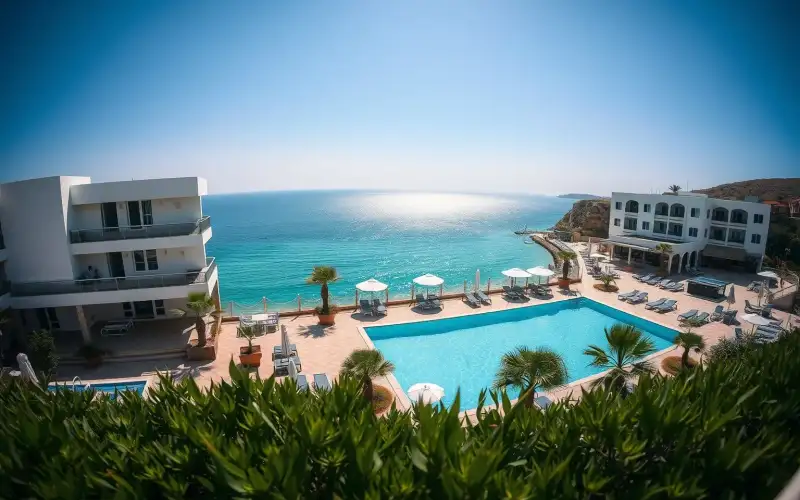
Last September, I watched a couple from Cornwall check into a beachfront Protaras property at 3pm, only to discover their 'quiet sanctuary' neighboured the island's loudest beach club. By 11pm, they were in the lobby requesting a room transfer. The receptionist had no available alternatives. They left the next morning, one-star review filed before checkout. This scenario repeats constantly across Protaras, and it's entirely avoidable with the right information.
Protaras has fundamentally split into two distinct hospitality zones over the past decade. The western stretch near Fig Tree Bay remains genuinely tranquil, catering to couples and older travellers seeking Mediterranean romance. The central and eastern sections have transformed into an open-air nightlife corridor, with beach clubs pumping until 3am and younger guests treating hotels as convenient crash pads between venues. Neither experience is wrong—but mixing them creates genuine misery.
I've stayed at over 200 Cyprus hotels across 15 years. Protaras taught me a hard lesson: location precision matters more than star ratings. A five-star property in the wrong zone will ruin a romantic anniversary. A three-star backpacker-friendly place metres from Ling Ling nightclub will feel perfect if you're 28 and seeking sunrise parties. This guide exists because British travellers—particularly the 35-65 demographic that dominates Protaras bookings—deserve clarity before committing £600-£1500 per week.
What You'll Learn From This Comparison
By the end of this article, you'll understand the precise geographical and operational differences between couple-friendly and nightlife-focused hotels in Protaras. We'll map exact locations relative to clubs and quiet zones, explain noise patterns by season and day of week, reveal which properties actively market to different demographics, and provide concrete decision-making criteria so you don't waste money on the wrong hotel for your needs.
This isn't about judging either market. Party tourists spend significant money and deserve venues. Couples deserve sleep. The problem is hotels caught between both worlds, satisfying neither. We'll identify those traps explicitly.
Prerequisites: Understanding Protaras Geography and Your Own Priorities
Before selecting a hotel, you need three pieces of information: accurate geography, honest self-assessment of your noise tolerance, and clarity about what 'nightlife access' actually means to you.
Protaras Geography: The Three Distinct Zones
Protaras stretches roughly 3 kilometres along the coast. It's not a single destination—it's three different ones sharing a postcode.
- Western Zone (Fig Tree Bay area): Extends from Pernera southward to Fig Tree Bay itself. Hotels here sit 800-1500 metres from the central club strip. This zone attracts couples, families with young children, and older travellers. Restaurants serve traditional Cypriot food. Supermarkets stock British newspapers. The beach is genuinely quiet. Walking to nightlife takes 15-20 minutes on foot, which most 45-year-old couples won't do spontaneously.
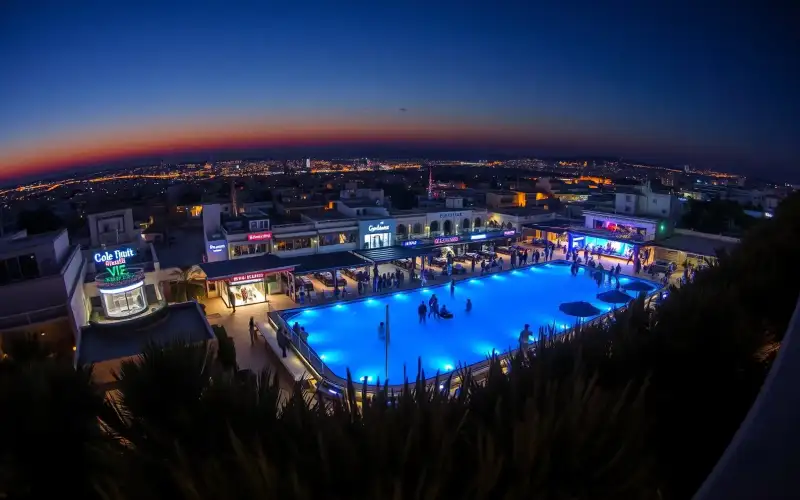
- Central Zone (Old Town/Main Strip): The 1.5-kilometre stretch containing Pernera's original village and the modern beach club concentration. Hotels here are 100-300 metres from venues like Ling Ling, Vraka, and Kalamies. Noise starts around 10pm nightly, peaks between midnight and 2am, and continues until dawn on Fridays and Saturdays. This zone is genuinely lively.
- Eastern Zone (Kapparis direction): Beyond the main club strip, quieter than central but without the romantic appeal of Fig Tree Bay. Hotels here cater to mid-range package tourists and families. Nightlife requires a five-minute walk or a €3 taxi ride. It's the compromise zone—rarely ideal for either couples or serious party-goers.
Understanding these zones is foundational. A hotel's star rating matters far less than its position within these three areas.
Your Noise Tolerance: Be Brutally Honest
British travellers often underestimate their own noise sensitivity. You might think you're fine with music until 1am, then discover at 2:30am that Cypriot club bass frequencies penetrate your skull differently than your local pub's sound system. Consider these scenarios:
- You're 42, you've booked five nights in Protaras with your husband, you want dinner by 9pm and sleep by 11:30pm. You need the western zone. Full stop.
- You're 28, you're travelling with three friends, you want to walk to clubs at 11pm and potentially stay out until sunrise. You need central zone proximity or accept frequent taxi costs.
- You're 58, you're retired, you want to experience Protaras nightlife occasionally but sleep undisturbed on most nights. You might tolerate eastern zone compromise, or you might be better served by Paphos or Larnaca entirely.
I've seen couples book central-zone hotels, optimistically telling themselves they won't mind the noise. By night two, one partner is sleeping in the car. Be honest before booking.
Your Nightlife Definition: Passive Presence vs Active Participation
When you say you want 'nightlife access,' do you mean:
- Passive presence: You enjoy sitting at a beach bar with a cocktail, listening to ambient music, maybe staying until 11pm. You don't need to be inside the club itself. You want the energy without the decibels.
- Active participation: You want to walk into clubs, dance, stay until 3am, potentially island-hop between venues. You'll be inside the venues, not observing from hotel rooms.
This distinction matters enormously. Passive-presence guests can stay in eastern zone hotels and walk 10 minutes to beach bars. Active participants need central zone proximity to justify the logistics and taxi costs across multiple nights.
Step 1: Map Your Ideal Hotel Location Against Fig Tree Bay and Club Proximity
Open Google Maps. Search 'Protaras Pernera.' Zoom to show the full coastal strip. Identify three reference points: Fig Tree Bay (the famous golden crescent beach at the western edge), Ling Ling nightclub (the largest venue, roughly central), and your accommodation dates.
Now measure distances from your shortlisted hotels to both points. A hotel 1200 metres from Fig Tree Bay sits roughly 15 minutes' walk from the romantic zone. The same hotel might be 800 metres from Ling Ling—a manageable 10-minute walk. These distances determine your actual experience far more than hotel amenities.
Use Google's street view function to virtually walk the routes at different times. Check what you'd encounter at 10pm, 1am, and 7am. I've identified properties whose 'quiet location' descriptions conveniently omit the fact that their pedestrian access route runs directly past three open-air bars with DJ stages.
Document this information. Write down: distance to Fig Tree Bay, distance to nearest major club, what you'd walk past at night, whether taxis operate 24/7 from the hotel (some rural properties have limited late-night transport), and whether the hotel has a shuttle service to venues.
Step 2: Investigate Hotel Demographic Positioning and Marketing Language
Visit the hotel's website and booking sites. Read the language carefully. Hotels market themselves explicitly to their target audience through vocabulary:
- Couple-focused language: 'Romantic sunset views,' 'intimate dining experiences,' 'spa and wellness,' 'honeymoon packages,' 'adults-only floors,' 'quiet beachfront location,' 'perfect for anniversaries.' These hotels are positioned away from nightlife.
- Party-focused language: 'Steps from beach clubs,' 'vibrant nightlife,' 'young and lively atmosphere,' 'easy access to bars and restaurants,' 'social vibe,' 'perfect for groups.' These hotels embrace the party market.
- Compromise language: 'Something for everyone,' 'family-friendly with nearby entertainment,' 'suitable for all ages.' These properties are often the most problematic—they're trying to serve both markets and usually fail at both.
Read guest reviews on TripAdvisor, Google, and Booking.com with specific attention to noise complaints. Search for phrases like 'noise,' 'music until,' 'couldn't sleep,' 'party,' and 'loud.' Calculate what percentage of reviews mention sleep disruption. If 15% or more of reviews mention noise, that hotel has a genuine problem.
Check review dates carefully. A noise complaint from July (peak season) is more significant than one from November. Nightlife volume fluctuates seasonally.
Step 3: Verify Noise Patterns and Operating Hours for Nearby Venues
Identify every beach club, nightclub, and late-night bar within 300 metres of your shortlisted hotel. Search Google Maps for 'nightlife Protaras' or 'bars Pernera.' Note names, approximate distances, and what you can find about their operating hours.
Contact the hotels directly with specific questions: 'Which nightclubs are within walking distance? What are their operating hours? How many guests do you typically accommodate during peak season? Do you have sound insulation?' Honest properties answer straightforwardly. Evasive responses are telling.
Check Protaras local Facebook groups and expat forums. Search for discussions about noise, specific hotels, and specific venues. Real locals and long-stay residents provide brutally honest assessments that reviews sometimes sanitise.
Consider the day-of-week factor. Thursday through Sunday nights in Protaras are genuinely lively, with club-hoppers and themed nights. Monday through Wednesday are significantly quieter. If you're visiting off-peak (November-March), noise is substantially less than summer.
Step 4: Compare Couple-Focused vs Party-Focused Properties Side by Side
Create a simple comparison table. Document your top three to five shortlisted hotels with these criteria:
| Hotel Name | Distance to Fig Tree Bay | Distance to Nearest Club | Noise Complaints % | Marketing Position | Guest Demographic | Sound Insulation Rating |
|---|---|---|---|---|---|---|
| Property A (Example) | 1400m | 1100m | 3% | Couple-focused | 35-65, families | Good |
| Property B (Example) | 800m | 200m | 22% | Party-focused | 18-35, groups | Standard |
| Property C (Example) | 950m | 600m | 18% | Compromise | Mixed | Fair |
This visual comparison clarifies which properties genuinely serve your needs and which represent compromise or risk.
Step 5: Make Your Final Decision Based on Your Actual Needs
By now, you should have clear information. Make your decision based on this hierarchy: location first, amenities second, price third.
If you're booking as a couple seeking tranquillity, location near Fig Tree Bay matters more than whether the hotel has a spa. A quiet property without a pool beats a luxury property with noise complaints. If you're booking as a group wanting easy nightlife access, proximity to central-zone clubs matters more than thread count on bedding.
Accept that no property perfectly serves both markets. A hotel genuinely quiet enough for romantic couples will feel remote to party-goers. A hotel close enough to clubs for convenient nightlife access will have noise audible in rooms. This isn't hotel failure—it's geography and physics.
Troubleshooting: What If You Booked Wrong?
Sometimes, despite research, you arrive and realise you've chosen poorly. Your 'quiet' property is hosting a wedding with a DJ. Your 'party-focused' hotel is quieter than expected because it's early May. What then?
Contact the hotel immediately upon arrival. Explain your situation without accusation. Request a room change to a different part of the property, away from the noise source. If the hotel has genuinely misrepresented its location or noise profile, request a partial refund or relocation to a different property. Most reputable Protaras hotels will negotiate rather than generate negative reviews.
If relocation isn't possible, use noise-cancelling headphones, earplugs, or white-noise apps. Schedule quiet time outside your room—beach time in the morning, restaurants in the afternoon, exploration of Pernera's quieter villages. Accept that one week in the wrong property is recoverable but not ideal.
For future bookings, use your actual experience to refine your search. If you found a property perfect for your needs, book it again next time. If you discovered a property misrepresented itself, leave an honest review describing the specific noise issues and distances to venues. Future British travellers will appreciate the clarity.
Final Verdict: Protaras Serves Both Markets, But Not Simultaneously
Protaras genuinely offers excellent experiences for both couples and party-goers. The western zone near Fig Tree Bay delivers genuine romance—quiet beaches, traditional restaurants, sunset views, and genuine Mediterranean tranquillity. The central zone delivers genuine nightlife—real clubs, beach parties, international DJs, and the energy that younger travellers seek.
The mistake is expecting a single hotel to deliver both. It can't. Physics, geography, and fundamentally different guest expectations make this impossible. Your job is simple: identify which experience you actually want, locate a hotel genuinely positioned for that experience, and book with confidence knowing you've made an informed choice. That clarity—that willingness to choose rather than compromise—separates excellent Protaras holidays from disappointing ones.
Comments (4 comments)