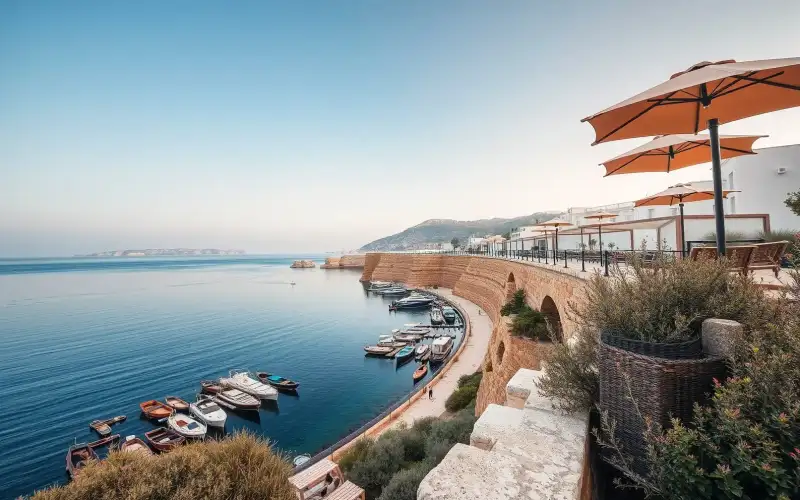
Last summer, I watched a British mum of two arrive at a supposedly "beachfront" hotel in Paphos only to discover the beach was a 15-minute walk downhill and entirely rocky. She'd booked based on three glowing reviews and a misleading thumbnail photo. By day two, her kids were bored and she was frantically searching for alternatives. That's the moment I realised how many first-time bookers miss the obvious signals hiding in plain sight.
Booking a Cyprus hotel for the first time feels overwhelming. You're juggling school holidays, exchange rates, unfamiliar place names, and an endless scroll of properties that all look vaguely the same in their marketing shots. Add in deposit policies, cancellation terms, and the minefield of fake reviews, and it's easy to make a costly mistake. This guide walks you through the process exactly as I'd advise a friend—step by step, with the specifics that actually matter.
What You'll Learn in This Guide
By the end of this walkthrough, you'll know how to identify which Cypriot region suits your family, which booking platforms are genuinely reliable, how to decode deposit and cancellation policies without needing a law degree, and most importantly, how to spot a dodgy review from a mile away. You'll also understand the common traps British travellers fall into—and how to avoid them entirely.
This isn't marketing fluff. I've stayed in over 40 Cyprus hotels with my three kids, read thousands of guest reviews, and spoken directly with hotel managers about what they wish guests understood before booking. What follows is what actually works.
Step 1: Choose Your Region Based on Your Family's Actual Needs
Cyprus has five main tourist regions, and picking the right one is half the battle. Most first-timers choose based on "it sounds nice" or "it's cheaper." That's backwards. Choose based on what your family will actually do for seven days.
Paphos (southwest coast) is quieter, more upmarket, and 45 minutes from the Akamas Peninsula national park. The beaches are mostly rocky or pebbled, not sandy. If your kids are under eight and need a proper sandy beach with shallow water, this isn't your first choice. But if you want fewer crowds, better restaurants, and access to hiking, it's excellent. Hotels here typically cost £80–£180 per night for a three-star family room.
Limassol (south-central coast) is the working city—more authentic, busier, with a proper promenade and water sports. The beach is actually sandy and long. It's 90 minutes to the Troodos Mountains for hiking, 30 minutes to the wine villages. Hotels range from £70–£200 per night. Good for families who want a mix of beach and exploring inland.
Larnaca (southeast coast) is the most budget-friendly and has the airport, so no transfer costs. The beach is sandy and shallow—brilliant for young kids. The town itself is less charming than Paphos or Limassol, but it's practical and the Hala Sultan Tekke mosque is genuinely striking. Hotels run £60–£150 per night. Book here if you want simplicity and the shortest possible journey from the airport.
Ayia Napa (far southeast) is party central in summer and has the best sandy beaches on the island. If you're travelling with teenagers and want nightlife nearby, or if your kids are old enough to entertain themselves while you relax, it works. In school holidays, it's rammed. Hotels cost £70–£200 per night, and you're paying for location more than quality.
Kyrenia (north coast) is technically in the Turkish Republic of Northern Cyprus—a political complication that matters for insurance, visas, and booking. It's stunning, less touristy, and excellent value. But it requires a separate entry process and not all UK travel insurance covers it. Only book here if you've researched the implications.
My honest take: for a first-timer with young kids, Larnaca or Limassol. For teenagers or adults-only, Paphos. For maximum beach time with minimal effort, Larnaca.
Step 2: Decide on Your Budget and Hotel Star Rating
Cyprus hotels use a Greek-style star system: one to five stars. It's not standardised across the EU, so don't assume a three-star hotel here matches a three-star in Spain.
In 2026, here's what you actually get:
| Star Rating | Nightly Cost (Family Room) | What's Included | Best For |
|---|---|---|---|
| 2-star | £50–£85 | Basic room, maybe a pool, minimal staff | Budget families, short stays |
| 3-star | £80–£150 | Good room, decent pool, kids' club often available | Most families, good value |
| 4-star | £150–£250 | Spacious rooms, multiple pools, proper kids' club, good food | Families wanting comfort without luxury prices |
| 5-star | £250–£500+ | Premium everything, excellent kids' clubs, multiple restaurants | Families prioritising service and facilities |
Most British families book three or four-star hotels. The jump from three to four stars is worth it if kids' club quality matters to you—at three stars, the kids' club might be a room with a TV and a bored teenager supervising. At four stars, it's usually structured activities with trained staff.
Set your budget first, then work backwards. If you have £1,200 for a week in July, that's roughly £170 per night—you're looking at a solid three-star or a budget four-star. Don't stretch to five-star and end up in a mediocre property just because it's available.
Step 3: Compare Booking Platforms (and Understand Their Differences)
You'll find the same hotel listed on Booking.com, Expedia, Hotels.com, and the hotel's own website. Prices vary slightly, and so do cancellation policies. This matters.
Booking.com dominates in the UK and has the most reviews. It's reliable, but read the fine print on each property's cancellation policy—it varies wildly. Some hotels offer free cancellation up to 14 days before arrival; others charge 100% if you cancel within 48 hours. Booking.com doesn't hide this, but it's easy to miss.
The hotel's own website sometimes offers a small discount (2–5%) for booking direct, plus you deal with the hotel directly if problems arise. But if the hotel goes bust or oversells, you have less protection than booking through an intermediary.
Expedia and Hotels.com offer similar deals to Booking.com. Hotels.com gives you a free night after ten bookings, which adds up if you travel regularly. But their search filters are clunkier.
My approach: find the hotel on Booking.com, read 30–40 recent reviews, then check the hotel's own website to see if there's a direct-booking discount worth the extra risk. Usually, it's not.
Step 4: Read Reviews Like You're Investigating a Crime Scene
This is where most first-timers fail. They skim five-star reviews and book. Don't do that.
Fake reviews exist. Hotels incentivise staff to post positives, and competitors post negatives. You need to read 40–50 reviews, not five. Look for patterns, not individual opinions.
Red flags in reviews:
- All five-star reviews with zero detail ("Amazing! Loved it!") – likely fake
- Reviews mentioning specific staff names repeatedly – sometimes real, sometimes coordinated
- One-star reviews from guests complaining about things outside the hotel's control ("Weather was rainy") – dismiss these
- Multiple reviews mentioning the same specific problem ("Kids' club closed on Tuesdays", "WiFi doesn't work in rooms") – this is real
- Recent reviews (last 30 days) are more reliable than year-old reviews – staff, maintenance, and policies change
Look for reviews from families with kids your age. A five-star review from a couple celebrating an anniversary tells you nothing about whether the kids' club is good. A three-star review from a mum of two saying "pool was great, kids' club was disorganised but staff were lovely" tells you everything.
I always sort reviews by "recent first" and read the last 30 days of feedback. If I see the same complaint twice, I ask the hotel directly via email before booking. Most will respond honestly.
Step 5: Understand Deposit and Cancellation Policies
This is where British travellers get stung. You're used to UK package holidays with flexible cancellation. Cyprus hotel bookings often aren't.
When you book, you'll see a cancellation policy. Common ones in 2026:
- Free cancellation up to 14 days before arrival – you pay nothing if you cancel before that date. After that date, you lose your full deposit (usually 20–30% of the total). This is standard and fair.
- Free cancellation up to 7 days before arrival – tighter window, riskier for you. Only book this if you're certain of your dates.
- Non-refundable rate – you pay the full amount upfront and cannot get a refund, ever. These are usually 10–15% cheaper. Only use them if you're 100% committed.
- Flexible cancellation (free up to 48 hours before arrival) – sounds great, but you're paying a premium price for that flexibility. The nightly rate is usually 15–20% higher.
Most platforms will show you the cancellation policy clearly, but it's buried in the fine print. Before you click "book," scroll down and read it. If you're booking in January for July, choose a policy with at least 14 days' notice. If you're booking two weeks before arrival, choose flexible cancellation or non-refundable only if you're certain.
Also check whether the deposit is refundable. Some hotels take a non-refundable deposit of 30%, then charge the balance two weeks before arrival. If you cancel within the cancellation window, you lose the deposit. This is standard, but it's different from a fully refundable booking where you only lose money if you cancel outside the window.
Step 6: Check Specific Amenities That Matter to Your Family
Hotel descriptions are vague. "Family-friendly" could mean anything. Dig into specifics.
Kids' clubs: Most three and four-star hotels claim to have one. Ask in your pre-booking email: What are the hours? Is it included or extra (£8–£15 per child per day)? What age range? Is it supervised the entire time or drop-in? Are there activities outside the club building, or is it one room? What happens if your child doesn't want to join—are there other kids around the pool?
Pools: "Multiple pools" sounds great until you arrive and one is being cleaned and the other is freezing cold. Ask: How many heated pools? Are there shallow kids' pools? What's the depth? Is there a slide (kids love this, but it matters for supervision)? Is the pool area fenced or open to the street?
Beach access: If the hotel claims beachfront, ask: Is it a private beach or public? Can you walk directly onto sand, or is there a road? What's the beach like—sand, pebbles, or rocks? Are there loungers and umbrellas, or do you bring your own?
Food: All-inclusive, half-board, or bed-and-breakfast? If it's all-inclusive, what's included—just meals, or snacks and drinks too? Are there restaurants outside the hotel within walking distance, or is it isolated? With three kids, I always choose half-board or B&B so we can explore local tavernas. All-inclusive sounds cheaper until you realise the food quality is mediocre and you're stuck eating at the hotel.
Email the hotel directly with these questions. A good hotel responds within 24 hours with specific answers. A bad one sends a generic reply or doesn't respond at all.
Step 7: Book and Confirm Everything in Writing
Once you've decided, book through your chosen platform. You'll receive a confirmation email. Save it. Print it. Screenshot it.
Then, email the hotel directly using the address on their website (not the booking platform). Say something like: "I have a booking confirmation number [X] for [your name], arriving [date]. I wanted to confirm a few details: we have three children aged 4, 7, and 10. Can you confirm the kids' club is available for all three age groups? Can you also confirm there's a shallow kids' pool?"
This does two things. First, it ensures the hotel knows you're coming and has your specific needs on file. Second, it gives you a paper trail. If you arrive and the kids' club is closed or the pool is being renovated, you have an email saying the hotel confirmed it would be available.
Most hotels respond within 24 hours. If they don't, that's a warning sign.
Troubleshooting: Common Problems and How to Avoid Them
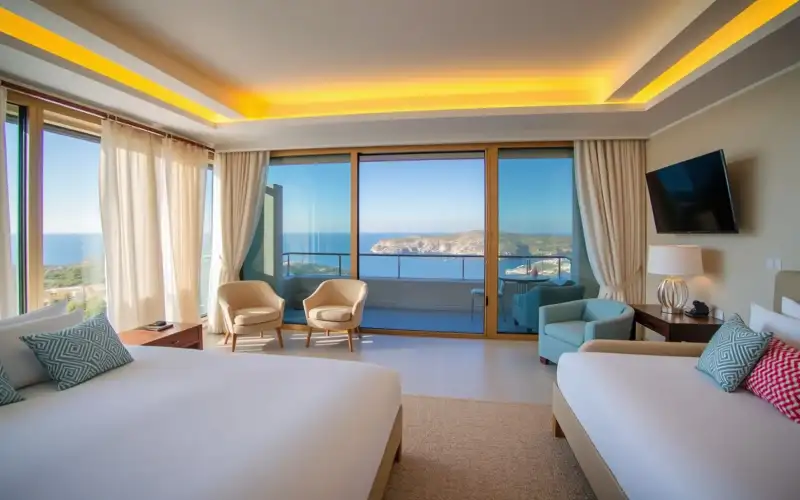
The hotel looks nothing like the photos. Photos are often outdated or shot at flattering angles. Check the review dates. If most recent reviews mention renovations or poor condition, dig deeper. Ask the hotel when the last renovation was and which areas were updated. If they can't answer, assume the worst.
The kids' club is closed or "not available this week." This happens in low season (May, September, October). If you're booking for school holidays, confirm the kids' club is running. Don't assume—ask directly.
The beach is too rocky or the water is too cold. Rocky beaches are common on the south coast. If sandy beach is essential, book Larnaca or Ayia Napa. Water temperature in June is 24°C, July–August is 28–30°C, September is 26°C. If your kids are sensitive to cold, avoid May and early June.
The hotel is noisy or next to a nightclub.** Read recent reviews carefully. If three reviews mention noise from nearby bars at midnight, believe them. Ask the hotel which side of the building is quietest and request a room there in your confirmation email.
The transfer from the airport costs more than expected.** Most hotels offer airport transfers for £15–£25 per person. Some charge £40+. Check the hotel's website before booking. Alternatively, book a car hire (£20–£30 per day) if you want independence, or use a shared shuttle service like Sunvil or Coral Travel (usually included if you book through them).
Final Thoughts
Booking your first Cyprus hotel doesn't require a degree in hospitality. It requires patience, specificity, and a healthy scepticism toward marketing. Read reviews from families like yours. Ask direct questions. Understand the cancellation policy before you click book. And most importantly, don't rush. The best deals aren't the cheapest ones—they're the ones where you actually get what you paid for.
I've seen families save £200 by booking a slightly cheaper hotel and losing it all on taxis, restaurant meals, and activities because the hotel had no kids' club. I've also seen families overpay for a five-star property and have a miserable time because the beach was inaccessible or the kids' club was poorly run. The difference isn't the price—it's the homework.
Do the homework. Your holiday depends on it.


Comments (5 comments)