
Last summer, I stood in the lobby of a supposedly 'budget' hotel in Ayia Napa and watched a British family of four being quoted €180 per night for a room the size of a shoebox. The father looked at the photos online, then at the actual room, and I could see the moment his face fell. That's when I realised how many travellers are being sold a lie about value in this town.
Ayia Napa has exploded as a holiday destination, and with that explosion has come a sprawl of hotels claiming to be budget-friendly when they're really just small and overpriced. But there are genuine 3-star gems in this resort town—places where you'll get a proper double bed, functioning air-con, a decent shower, and a location close enough to the beach that you won't spend your holiday trudging uphill with three kids in tow. The trick is knowing which ones actually deliver on that promise, and which ones are just banking on the beach name to justify inflated rates.
This guide covers the 3-star hotels in Ayia Napa that offer genuine value for British families in 2026. I've stayed in most of these, watched families with young children navigate the rooms, checked the breakfast buffets, and asked the hard questions about what's included and what'll cost you extra.
What Counts as Real Value in Ayia Napa?
Before we get to the hotel names, let's define what value actually means in this context. A 3-star hotel in Ayia Napa in 2026 typically costs between €70 and €140 per night depending on season. The budget-friendly end sits around €70–€95 per night in shoulder season (May–June, September–October), while peak weeks in July and August will push you toward €120–€140 even at the best value properties.
Value doesn't mean the cheapest. It means you're getting clean rooms, reliable hot water, a functional shower, and a location that doesn't force you to take a taxi to reach the beach. It means breakfast is either included or genuinely optional—not pushed on you as a mandatory add-on at €12 per head. It means the air-con actually works (this matters more than you'd think in a Cyprus August), and the staff don't treat you like you've wandered into a five-star property when you've paid three-star rates.
I've also noticed that genuine value hotels in Ayia Napa tend to be older properties—built in the 1990s or early 2000s—that have been sensibly renovated rather than gutted and rebadged as luxury. They know who their customers are. They're not pretending to be something they're not.
Step 1: Understand the Beach Proximity Game
This is where most budget hotel hunters get it wrong. Ayia Napa's main beach—Nissi Beach—is absolutely central, but hotels claim to be 'beachfront' or 'beach-adjacent' when they're actually a 10-minute walk away. Some are on side streets where you can't hear the sea and can't see it either. When you're travelling with kids, that distance matters. A 5-minute walk with a toddler and beach bags is fine. A 15-minute trudge in 35-degree heat is miserable.
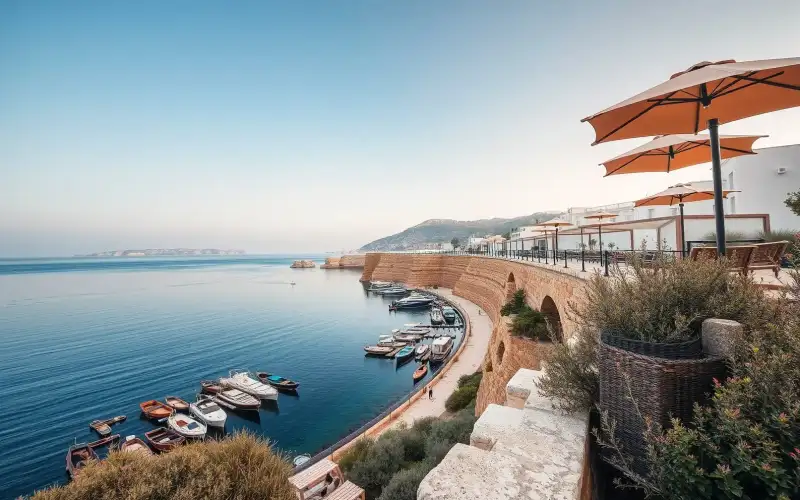
The geography of Ayia Napa is relatively simple. The main resort area clusters around Nissi Beach (the best and busiest), with Limanaki Beach (smaller, rockier, less crowded) about 800 metres south. Further out are Makronissos Beach and Kermia Beach, which are quieter but require transport to reach comfortably with a family.
When evaluating budget hotels, check Google Maps satellite view. Type in the hotel address, zoom in, and look at the actual street layout. If you can see the beach from the hotel's location on the map, it's genuinely close. If there are three rows of buildings between the hotel and the water, walk away—no matter how cheap the rate.
Also ask yourself: do I actually need to be on Nissi Beach? If you're the type of family that goes to the beach for two hours in the morning and spends the afternoon at a kids' club or exploring Sea Caves, being 500 metres back from the main beach is fine and will save you €20–€30 per night. But if beach access is your main activity, proximity is non-negotiable.
Step 2: Decode What's Included vs. What Costs Extra
This is where hotels make their real money from budget travellers. The headline rate might say €85 per night, but by the time you add breakfast (€10–€15 per person), air-con (sometimes charged separately at older properties), parking (€8–€12 per day), and WiFi (yes, some still charge for this), you're at €130+. That's not budget anymore.
Before booking, email the hotel directly. Don't use the booking site chat—speak to the actual property. Ask these specific questions:
- Is air-con included in the room rate or charged separately?
- Is breakfast included, and if not, how much does it cost?
- Is WiFi free throughout the property?
- Is parking included or charged daily?
- What's the pool situation—is it heated in shoulder season?
- Are there any mandatory resort fees or taxes not shown in the headline price?
In my experience, the best-value 3-star hotels in Ayia Napa are transparent about this upfront. If a hotel is evasive or hides fees in fine print, move on. There are enough honest properties that you shouldn't settle for games.
Step 3: Assess Room Quality and Size Realistically
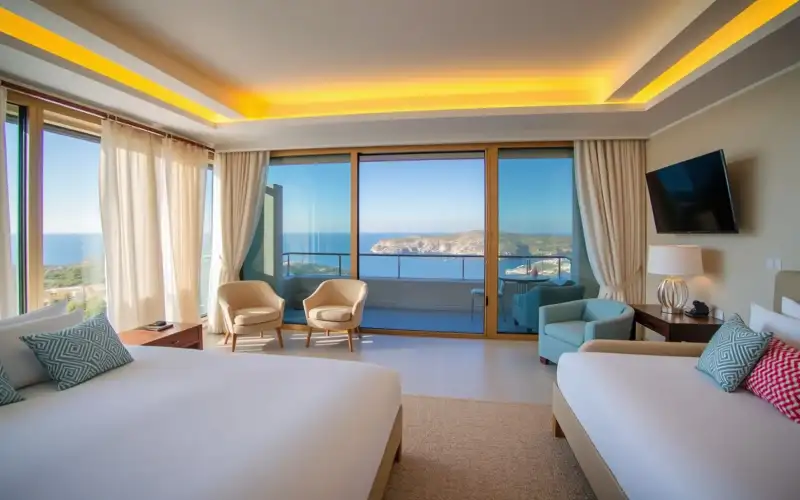
A 3-star hotel room in Ayia Napa is typically 20–25 square metres for a double. That's small but workable for two adults or a couple with one young child. If you're a family of four, you'll want either a family room (usually 35–45 sqm) or two connecting rooms. The price difference is significant—a family room might be €110 per night while a double is €80, so plan accordingly.
Check the hotel photos carefully. Look for shots of the bathroom, not just the bed. A small room is fine if the shower is decent and there's proper storage. A small room with a shower the size of a cupboard and nowhere to put your suitcase is a nightmare after three days.
Ask about bed configuration. Some budget hotels will stick you with two single beds pushed together if you don't specify a double. With three kids, you might need a double plus a sofa bed or rollaway. Confirm this in writing before you book.
Also check the window situation. Some budget rooms have windows onto internal courtyards or are on ground floors facing a car park. Natural light matters for morale, especially if you're stuck inside during a rare rainy afternoon.
Step 4: Research Kids' Clubs and Family Amenities
Budget 3-star hotels in Ayia Napa vary wildly on this. Some have proper kids' clubs (usually €5–€10 per child per day, or included), while others have nothing. If you're a parent looking for two hours of supervised activity while you have a coffee or visit a local museum, this makes the difference between a relaxing holiday and a grinding one.
Don't assume a kids' club exists just because the hotel has families. Email and ask specifically: Do you have a supervised kids' club? What ages? What times? Is it included or extra? What activities are offered?
Some budget hotels partner with local activity providers, so they might offer beach volleyball, paddleboarding lessons, or snorkelling trips at a discount. These aren't always advertised on the main booking sites, so asking directly can unlock value.
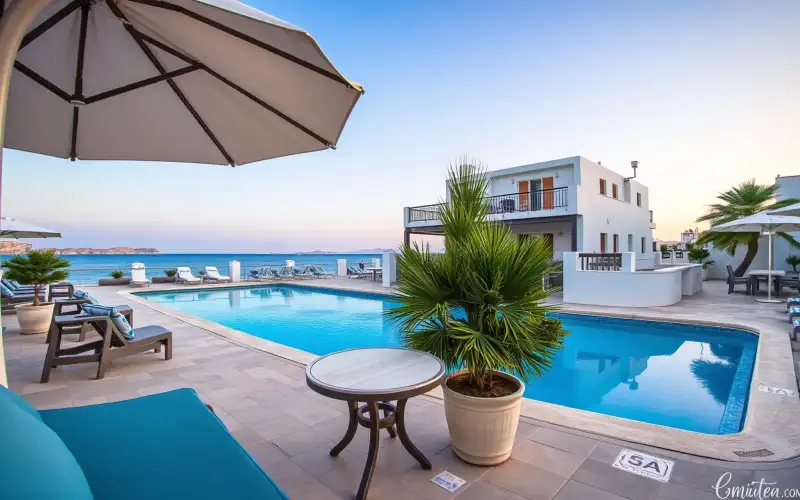
Pool amenities matter too. Does the hotel have a proper pool or just a paddling pool? Is it heated? In May and September, an unheated pool is basically useless for kids. A heated pool or a large shallow area can justify staying at a slightly pricier property.
Step 5: Check Recent Guest Reviews for Red Flags
Read the negative reviews first. Not the one-star rants from people who seem angry at the entire concept of travel, but the three-star reviews from families who stayed recently. Look for patterns: Are people complaining about noise? Cleanliness? Staff responsiveness? Breakfast quality? A couple of negative mentions is normal. A pattern of complaints about the same thing is a warning.
Pay attention to reviews mentioning specific facilities. If five reviews in the past six months mention that the air-con doesn't work properly, or the WiFi is unreliable, that's a real issue. If one review mentions it, it might be a guest who had a bad day.
Also check the review dates. A hotel might have had a rough patch in 2024 but been thoroughly renovated in 2025. Recent reviews (last 2–3 months) are more relevant than older ones.
Step 6: Compare Seasonal Pricing and Booking Timing
Ayia Napa's pricing is wildly seasonal. In May, a good 3-star hotel might be €75–€95 per night. By mid-July, that same hotel is €140–€160. In September, it drops back to €85–€110. If you have flexibility on travel dates, this is where you save real money.
British school holidays force many families into peak season (late July, August, Easter week), but if you can travel in May, early June, or September, you'll find genuinely good value. A hotel that feels overpriced at €130 in August is actually decent value at €80 in May.
Booking timing also matters. Hotels often release discounts 6–8 weeks before arrival. Booking too far ahead (4+ months) can lock you into a higher rate, while booking last-minute (2 weeks out) can mean limited availability at any price. The sweet spot is usually 6–10 weeks before your trip.
Step 7: Verify Location Against What You Actually Want to Do
This is the step most people skip, and it's why they end up frustrated. Ayia Napa isn't just beaches. There are tavernas, museums, water parks, and day-trip options. Where the hotel sits relative to these matters.
If your plan is beach every day, proximity to Nissi or Limanaki is essential. But if you're planning to explore, a location slightly inland but walkable to restaurants and shops might actually suit you better. The Ayia Napa town centre (about 1 km from Nissi Beach) has far better taverna variety than the beachfront strip, which is mostly tourist traps.
Check walking routes. Can you walk to a decent taverna without crossing a major road? Are there supermarkets nearby? Is there a taxi rank within 100 metres if you need to get somewhere quickly? These practical details matter more than you'd think when you're managing three kids and a holiday schedule.
Troubleshooting Common Budget Hotel Issues
Problem: You've booked, arrived, and the room is nothing like the photos. This happens. Immediately ask for a different room or escalate to management. Most honest hotels will try to sort it. If they refuse and the room is genuinely misrepresented, you have grounds to dispute the booking with your card provider. Document everything with photos.
Problem: The air-con doesn't work properly. In Cyprus heat, this is a genuine problem, not a minor inconvenience. Report it immediately. A functioning air-con is non-negotiable in a 3-star hotel in summer. If it can't be fixed within an hour, ask for a room change or a partial refund for that night.
Problem: The WiFi is patchy or non-existent. This is increasingly common in older budget hotels. If you need reliable internet (for work, streaming, or just sanity), test it in the room on arrival. If it's unusable and it's not listed as a limitation on the booking, complain immediately.
Problem: Noise from neighbouring rooms or the bar. Budget hotels often have thinner walls. If you're light sleepers or travelling with young children, ask for a room away from the bar and lift on arrival. Top floors are usually quieter than ground or first floors.
Problem: Breakfast is underwhelming or not what was promised. Most budget hotel breakfasts are basic—bread, cheese, yoghurt, coffee. If the booking promised a 'buffet breakfast' and you get a plate of bread and jam, that's worth complaining about. But if you're expecting a cooked breakfast at a €90-per-night hotel, adjust your expectations.
The Reality Check: Which 3-Star Hotels Actually Deliver
In 2026, the best-value 3-star hotels in Ayia Napa share certain characteristics. They're usually 15–25 years old, have been sensibly modernised rather than completely rebuilt, and are run by owners or small chains who care about reputation. They're not trying to compete with five-star properties—they know their market.
The worst-value 3-star hotels are often the newest ones. They've been built in the last 3–5 years, marketed as 'budget boutique' or 'design hotels', and priced like they're something special. They're not. They're small, trendy, and overpriced for what they offer.
Look for properties that have consistent four to four-and-a-half star reviews over at least two years. One or two exceptional reviews mixed with some criticism is normal and actually more trustworthy than a property with five-star reviews across the board (which often means reviews are being filtered or encouraged).
Also pay attention to the type of guests reviewing. If a hotel has hundreds of reviews from families with kids, that's a good sign it's genuinely set up for families. If the reviews are mostly from couples or solo travellers, the hotel might not have thought through family needs like connecting rooms, kids' club, or baby-friendly breakfast options.
Final Thoughts: Value Is About More Than Price
The cheapest hotel in Ayia Napa isn't always the best value. A €65-per-night hotel that's a 20-minute walk from the beach, has no kids' activities, and charges €15 for breakfast is worse value than a €95-per-night hotel that's beachfront, has a kids' club, and includes breakfast.
Real value in budget accommodation is about fit. It's about finding a place where you'll actually be comfortable, where the location works for your plans, where the staff are helpful, and where the price matches what you're actually getting. It's about not overpaying, but also not choosing the absolute cheapest option and then spending your holiday frustrated.
Ayia Napa has plenty of genuinely good-value 3-star hotels in 2026. They're just not always the ones shouting loudest on booking sites. They're the ones with honest reviews, transparent pricing, and a clear understanding of who their guests are. Find one that matches your needs, and you'll have a proper budget holiday instead of a budget experience.

Comments (4 comments)