
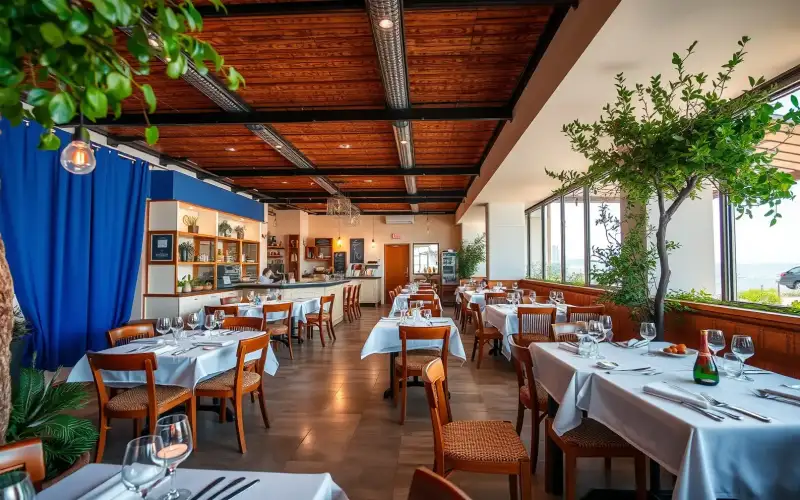
My daughter refused to eat anything at the all-inclusive buffet on day two of our first Cyprus trip. Not the souvlaki, not the moussaka, not even the chips. She sat there with her arms crossed while I mentally calculated the cost per meal we were "wasting." By day four, we took a minibus into Paphos Old Town and found a family-run taverna called Demitri's tucked down a side street. She ordered kleftiko—slow-roasted lamb wrapped in parchment—and ate every bite. That night cost more than three hotel buffets combined, but it taught me something crucial: Cyprus eating isn't binary. It's about knowing when each option works, and when it doesn't.
Understanding Cyprus Hotel Dining in 2026
Most Cyprus hotels offer one of three dining setups: all-inclusive (buffet meals and snacks included), half-board (breakfast and one dinner included), or bed-and-breakfast (just breakfast). The all-inclusive model dominates the west coast resorts around Paphos and Limassol, while smaller family hotels in the Troodos foothills often stick to B&B. Understanding what you're actually getting matters more than the price tag on your booking confirmation.
All-inclusive hotel buffets in Cyprus typically run from 7:00 to 10:30 a.m. for breakfast, noon to 2:30 p.m. for lunch, and 6:30 to 9:00 p.m. for dinner. My experience across five different hotels: the breakfast buffet is genuinely strong. You'll find fresh Cypriot halloumi, local yoghurt, excellent bread, cold cuts, eggs cooked to order, and fruit that actually tastes like something. The lunch and dinner buffets are where things get predictable. Every hotel seems to rotate the same ten dishes: moussaka, souvlaki, pastitsio, grilled fish, various meze plates, and pasta. Quality varies dramatically. I've had moussaka that was genuinely excellent (Hotel Annabelle in Paphos) and moussaka that tasted like it was assembled in 1987 and never improved (name withheld to protect the guilty).
The real hidden cost of all-inclusive isn't the food—it's the mental burden. You feel obligated to eat there because you've paid for it. My husband would sit through a mediocre dinner rather than "waste" the inclusion, while I'd sneak out for a proper meal and feel guilty about the cost. That tension doesn't disappear until you decide in advance which meals you'll skip.
What to Expect from a Cypriot Taverna
A proper Cypriot taverna is not a restaurant in the way British diners think of restaurants. There's rarely a printed menu with descriptions. The owner—or their spouse, or their teenage son—will recite what they've made today. There might be seven dishes, might be three. Prices are often not listed. The dining room is usually simple: plastic chairs, paper tablecloths, maybe some fishing nets on the wall. The kitchen is visible and chaotic. You will hear shouting in Greek. This is completely normal and indicates passion, not crisis.
Pricing works like this: a main course at a proper family taverna in 2026 runs €8 to €16. A meze platter for two people (five to eight small dishes) is €14 to €22. Wine by the carafe is €5 to €8 per litre. A bottle of local Cypriot beer costs €2 to €3.50. These prices are roughly double what you'd pay for a tourist-trap restaurant near a beach or town centre, and the food is infinitely better. The tavernas frequented by locals—the ones you need to hunt for—are almost always the ones worth eating at.
Timing matters. Cypriots eat lunch between 1:00 and 3:00 p.m., and dinner after 8:30 p.m. If you arrive at a taverna at 6:00 p.m., you'll be the only people there, and the kitchen staff will be visibly irritated. The sweet spot is 1:30 p.m. for lunch or 8:45 p.m. for dinner. Yes, this means your kids eat late. Yes, they'll adapt within three days. No, this doesn't cause the apocalypse British parents fear.
Kids' Menus and Reality
Here's the uncomfortable truth: Cypriot tavernas don't have kids' menus. They have children. The assumption is that kids eat what the adults eat, in smaller portions. You ask for a small plate of whatever you're having, pay accordingly, and everyone moves on. This works brilliantly if your child will eat grilled fish or lamb. It works less well if your child will only eat chicken nuggets shaped like dinosaurs.
Hotel buffets cater explicitly to this problem. They always have pasta with tomato sauce, grilled chicken breast, chips, and bread. Your child can construct an entirely beige meal and survive on it for two weeks. This is not nutrition, but it is peace. I've watched parents with extremely fussy eaters choose all-inclusive specifically for this reason, and I don't judge them. Eating out in Cyprus when you have a six-year-old who won't try anything requires patience, occasional strategic ordering (order moussaka for yourself and a small plate of plain rice for them), and acceptance that some meals will be less pleasant than others.
That said, I've also watched my pickiest eater gradually expand her palate over a two-week stay. By day ten, she was trying grilled octopus. By day twelve, she asked for it specifically. Hotels don't provide that kind of gentle pressure to experiment.
The Real Cost Comparison
Let's do actual maths, not the vague estimates that appear in travel blogs. I'm comparing a family of four: two adults, one eight-year-old, one six-year-old. All-inclusive hotel rates in mid-2026 for a family room on the west coast run €120 to €200 per night depending on the property and season. That includes all meals and snacks.
A comparable meal at a local taverna: starter of saganaki (fried cheese) at €6, two main courses at €13 each, two kids' portions of pasta at €5 each, one carafe of wine at €7, two beers at €3 each, water and bread. Total: approximately €57 for four people. Add a second taverna meal that day (lunch somewhere else) at €35. You've spent €92 on food, versus the €120-€200 hotel inclusion. But here's the catch: you're eating two proper meals and skipping the mediocre buffet lunch. You're eating better food for slightly less money, with the added cost of transport to the restaurant (€5-€10 by taxi or minibus, or free if you walk).
The comparison changes if you're half-board instead of all-inclusive. Half-board adds perhaps €30-€50 to your nightly room rate. You get breakfast and one dinner, and you're free to eat lunch and other dinners wherever you choose. This is my preferred setup for a two-week family stay. You have structure (a decent hotel breakfast), you have flexibility (choose restaurants for other meals), and you're not throwing away included meals you don't want.
When to Stay at the Hotel, and When to Venture Out
Practical guidance, based on actual parenting:
Eat at the hotel when: You're exhausted and don't want to negotiate transport. You have a very fussy eater and can't face the stress of a restaurant where there's no kids' menu. It's Tuesday night, it's rained, everyone is slightly grumpy, and you need predictability. You're on a tight budget and have all-inclusive included. You're staying more than ten days and need some meals to be genuinely mindless. The kids are under five and you don't want to manage a restaurant environment.
Venture out when: You want to experience actual Cyprus, not resort Cyprus. You're willing to accept that a meal might be slightly chaotic or take longer than expected. You're staying more than four nights and want to break the monotony of the same buffet. You have at least one child who will try new foods. You want better value for money. You're travelling in shoulder seasons (April-May or September-October) when restaurants are quieter and more welcoming to families.
Practical Tips for Eating Out with Kids
Eat lunch, not dinner, as your "adventure" meal. Lunch is earlier, less crowded, and your kids will be better behaved. Save dinners at the hotel or at kid-friendly chain restaurants (yes, they exist in Cyprus) for when you're tired.
Learn five words: "Ti yinete simera?" (What do you have today?), "Mikri portion" (small portion), "Nero" (water), "Yasas" (cheers), and "Efharisto" (thank you). Taverna owners are noticeably friendlier when you make an effort, and they'll often bring extra bread or olives for kids.
Download Google Maps offline. Knowing exactly where you are and where the taverna is reduces the stress of navigating unfamiliar roads with three children. Wandering aimlessly works in theory; in practice, someone will be hungry or hot after fifteen minutes.
Always ask the price before ordering if it's not listed. "Poso kani?" (How much?) is your friend. You won't be seen as cheap; you'll be seen as practical.
Book taxis for return journeys from restaurants if you've had wine. Minibuses are cheap (€2-€3 per person) and frequent on main routes, but if you're unfamiliar with the area, a taxi removes the stress. Budget €8-€12 for a taxi ride back to your hotel.
Bring snacks. A small pack of biscuits or fruit in your bag means your kids won't be starving during the wait between ordering and food arriving. The wait can be thirty minutes, which is normal and not a sign of poor service.
Common Mistakes First-Timers Make
Expecting fine dining at taverna prices. The best food in Cyprus is not fancy. It's simple, local, and often served in a room with plastic chairs. If you're looking for linen tablecloths and plated presentations, you'll find restaurants that provide that, but you'll pay €40-€60 per main course and the food won't necessarily be better.
Eating dinner too early. If you arrive at a taverna at 6:30 p.m., you'll be the only family there, and the kitchen staff will be in prep mode. They're not ready. Wait until 8:30 p.m. or later, even if it feels absurdly late by British standards. Your kids will adapt faster than you expect.
Choosing restaurants based on TripAdvisor ratings alone. The highest-rated restaurants are often the ones catering to tourists, not the ones serving the best food. Look for restaurants with moderate ratings (4.2-4.5 stars) that have reviews mentioning "local" or "authentic." Those are your spots.
Assuming all hotel buffets are the same. They're not. A €150-per-night all-inclusive will have noticeably better food than a €80-per-night all-inclusive. The investment matters. Similarly, a family hotel with 30 rooms will serve better buffet food than a 300-room resort. Scale matters.
Not exploring beyond your hotel's immediate area. Many first-time visitors eat at their hotel for the entire stay because it's convenient. The taverna serving the best food in your area might be two kilometres away, a ten-minute minibus ride, or a twenty-minute walk. You'll never find it if you don't leave the hotel grounds.
Regional Variations: Where You're Staying Matters
Paphos (west coast): Tourist-focused, pricey, lots of mediocre restaurants aimed at package-tour groups. The exception is the Old Town area and the villages inland (Tala, Kouklia). You'll pay more than you would in other regions, but the food is better. Hotel buffets here are generally very good because competition is fierce.
Limassol (south coast): More touristy than Paphos, with better local restaurants if you venture into the Old Town or the surrounding villages. The seafront is expensive and mediocre. Head inland to find real value.
Larnaca (east coast): Less touristy, cheaper than west coast, good local tavernas near the seafront. Hotel buffets are more basic but adequate. This is where you'll find the best value for money if you're willing to eat out.
Troodos Mountains: Village tavernas are exceptional, prices are lower, and the food is more meat-focused (grilled lamb, kleftiko, souvlaki). This is where you go if you have one meal out and you want it to be genuinely memorable. Hotels are often small and don't have buffets; breakfast is usually continental, and you're expected to eat out for other meals.
Making the Decision: A Practical Framework
On your first morning, eat the hotel breakfast. Assess the quality. If it's genuinely good (fresh fruit, good bread, proper coffee, made-to-order eggs), you've found a keeper. If it's tired pastries and instant coffee, you might want to explore elsewhere for breakfast on future days.
On your first lunch, skip the hotel and take a minibus into the nearest village. Find a taverna with locals eating there. Order meze and wine. This gives you a baseline for what proper Cyprus food tastes like, and it removes the mystery from eating out. You'll know whether you enjoy it, whether your kids can handle it, and what it costs.
For subsequent meals, alternate. One dinner at the hotel, one dinner out. This prevents both buffet fatigue and the exhaustion of constantly organizing restaurant meals. By day four or five, you'll have a strong sense of which approach you prefer for different situations.
Use apps like Google Maps and TripAdvisor, but weight them carefully. Look for restaurants with 50+ reviews (not 5), moderate ratings (4.2-4.5, not 4.9), and reviews that mention specific dishes or local character. Skip restaurants with photos of tourists posing with cocktails.
The Honest Verdict
There's no single right answer. Some families will genuinely prefer the predictability and convenience of all-inclusive hotels. Other families will find that approach soul-destroying. Most families—and this is where you probably are—will benefit from a mix: some hotel meals for convenience and peace, some local taverna meals for experience and better value.
The best approach for a two-week first visit: stay somewhere with half-board or breakfast-only. Eat hotel breakfast every day (it's the strongest meal). Eat lunch out most days, choosing tavernas in local areas. Eat some dinners at the hotel when you're tired, and some dinners out when you have energy. By the end of your stay, you'll have experienced both Cyprus dining worlds, and you'll know which one you prefer.
And if your child refuses everything except plain rice on day two? That's normal. By day ten, I guarantee they'll be trying something new. That's the real magic of Cyprus—not the food itself, though it's genuinely excellent, but the way two weeks of eating differently gradually shifts what your kids will eat. That's worth the occasional mediocre buffet dinner.
Comments (5 comments)