
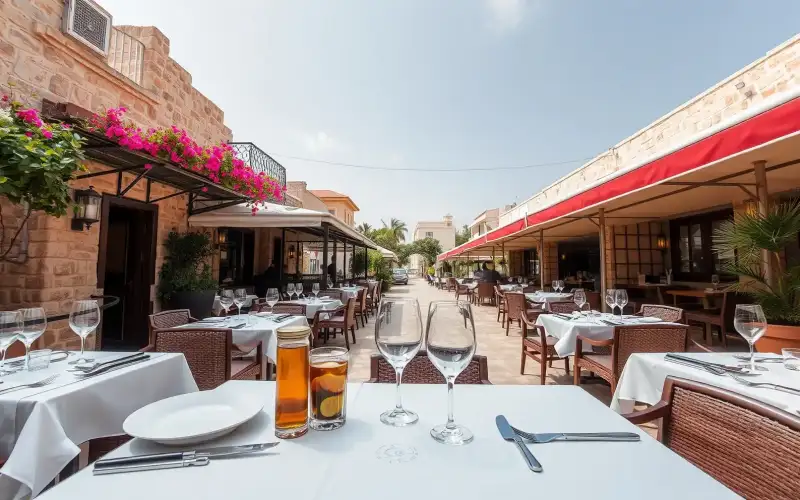
I watched a couple from Surrey push away barely-touched moussaka at the Coral Beach Resort's main restaurant last October. They'd paid £89 per person for half-board, and the dinner that night was reheated, underseasoned, and served at 6:45 PM because that's when the kitchen closes. Two streets inland, at Taverna Stelios, the same dish—made that morning from aubergines bought at the Paphos market—cost £7.50 and arrived still warm from the oven.
That gap between what you pay and what you get is the real story of eating in Paphos. It's not that hotel restaurants are universally terrible. Some are genuinely good. But the pricing structure, the volume-driven mentality, and the simple economics of feeding 400 guests nightly create a ceiling on quality that independent tavernas don't have to respect.
The Hotel Restaurant Reality: What You're Actually Paying For
Let's start with the money, because that's what matters when you're budgeting a two-week break. A typical three-star hotel in Paphos—say, the Axiothea or similar mid-range property—charges around £35–45 per person per night for half-board (bed, breakfast, and dinner). Full-board runs £50–65. At the five-star end, the Coral Beach or Annabelle charge £55–75 for half-board, sometimes more during peak season.
Here's what you need to understand: those prices are calculated on occupancy assumptions and food cost ratios that assume you'll eat the same standardised menu as 300 other guests. The hotel isn't trying to delight you. It's trying to hit a target food cost of 28–32% of the room rate while managing kitchen labour efficiently. That means:
- Menus rotate every four days to use the same proteins and vegetables across multiple dishes
- Sauces and dressings are batch-prepared and stored, not made fresh to order
- Portion sizes are pre-plated and weighed to minimise waste
- Peak dinner service runs 7:00–9:30 PM; after that, the kitchen closes
I'm not saying this to be cruel. It's logistics. When I ran a 180-room hotel in Larnaca in 2008, we operated exactly this way. The alternative—fresh-to-order cooking for 200 guests at dinner—would require doubling kitchen staff and raising prices by £15–20 per person per night. Guests wouldn't accept it.
But here's what matters: you're paying for convenience and certainty, not quality. You know dinner will be available at 7:30 PM. You know it will be edible. You don't have to book ahead or navigate menus in Greek. That's worth something. The question is whether it's worth £35–45 per night.
Local Tavernas: The Economics of Independence
A proper local taverna in Paphos—not a tourist trap on the harbour front, but a place where Cypriot families eat on Friday nights—operates on completely different constraints. Taverna Stelios, which I mentioned, seats 32 people. The owner, Stelios, is also the head chef. His wife manages the front. They buy fresh produce daily from the market or from their own garden. They don't have a rotating four-day menu; they cook what's in season and what the suppliers brought that morning.
A typical meze at such a place—eight to ten small dishes, enough for two people—costs £18–24. A main course (grilled fish, lamb keftedes, or stifado) runs £9–14. A carafe of house wine is £6–8. You'll spend £35–40 for two people including soft drinks and perhaps a dessert. That's less than half the per-person cost of a hotel dinner, and the food is usually superior because it's made once, for people who are actually eating it, not batch-cooked for 300.
The trade-off is friction. You need to book ahead during summer (many places still don't take reservations online). You need to navigate a menu that might be handwritten or entirely in Greek. Dinner service doesn't start until 8:00 PM, which feels late if you're used to eating at 6:30. The restaurant might be a 10-minute walk or a €3 taxi ride from your hotel, not downstairs.
But here's what you gain: food cooked by someone who cares about it, ingredients that cost less because they're bought fresh and local, and prices that reflect reality, not resort economics.
The Hotel Restaurants That Actually Compete
Not all hotel restaurants are mediocre. Some genuinely rival independent spots, and it's worth knowing which ones, because if you're going to pay hotel prices, you might as well eat well.
The Coral Beach Resort (Five-Star, Coral Bay)
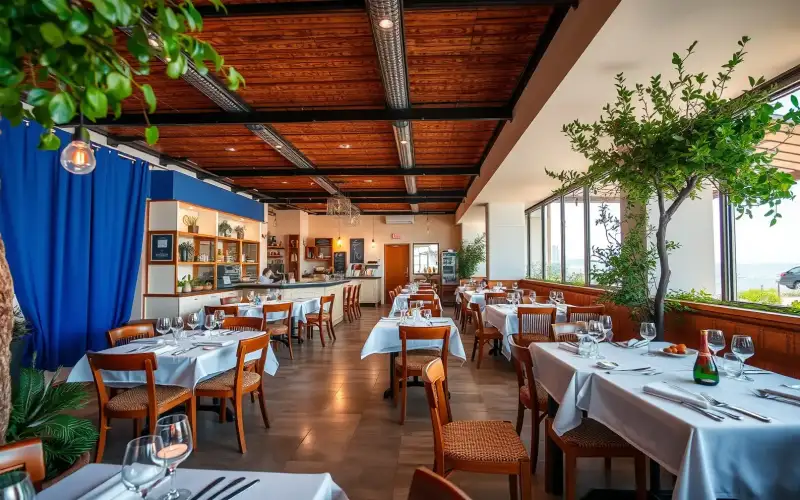
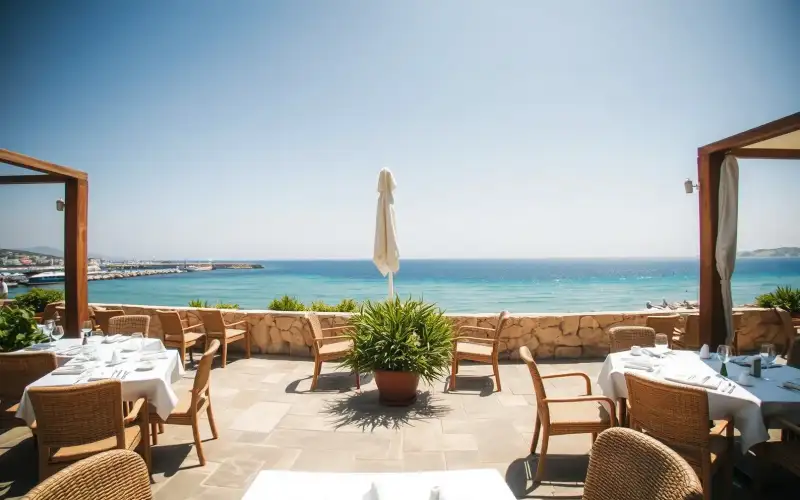
The Coral Beach's main restaurant, Elia, is run by a chef named Panikos who previously worked at a Michelin-listed restaurant in Athens. The menu changes weekly based on what's available at the market. The kitchen is open until 10:30 PM, which means late diners aren't rushed. Dinner à la carte (not included in board) costs £22–35 per main course, which is expensive for Paphos but reasonable for the standard. The buffet included with half-board is genuinely good—properly seasoned, with daily specials that rotate. If you're considering half-board here, it's one of the few places where it makes sense. Cost: £65–75 per person per night for half-board in July 2026.
The Annabelle (Four-Star, Paphos Town)
The Annabelle's restaurant, Artemis, is smaller (80 seats) and more curated. The chef, Maria, sources fish directly from the harbour. The menu has a Greek emphasis rather than the typical international buffet. Half-board here is £50–60 per person per night, and it's actually competitive with eating out independently, especially if you're not confident navigating local restaurants. The wine list is decent, which is rare in Paphos hotels.
Alexander The Great Beach Hotel (Three-Star, Chlorakas)
This is the outlier: a three-star property with a genuinely good restaurant. The owner, Yiannis, is obsessed with food. The kitchen is small, so they don't do buffet; instead, they offer a three-course set menu (different each night) plus à la carte options. Dinner costs £18–22 per person if you're à la carte, which is barely more than a local taverna, but the food quality is higher than most four-star hotels. Half-board is £40–48 per person per night, and it's good value.
The pattern here is clear: the best hotel restaurants are smaller, chef-driven, and willing to limit covers to maintain quality. They're the exception, not the rule.
Specific Price Comparisons: Hotel vs. Taverna
Let me give you concrete examples, because abstractions don't help when you're deciding whether to book half-board.
| Dish | Hotel (Coral Beach) | Taverna (Stelios) | Difference |
|---|---|---|---|
| Grilled sea bream (whole fish) | £28 | £11 | Hotel: 2.5× more |
| Lamb keftedes (6 pieces) | £22 | £8 | Hotel: 2.75× more |
| Meze for two (8–10 dishes) | £45 (à la carte) | £20 | Hotel: 2.25× more |
| Carafe of house wine (750ml) | £14 | £6.50 | Hotel: 2.15× more |
| Three-course dinner for two (total) | £95–110 | £38–45 | Hotel: 2.3× more |
The markup is consistent: hotel restaurants charge roughly 2.3 to 2.75 times what you'd pay at a comparable independent taverna. Part of this is legitimate—rent, staffing, and service standards are higher. But much of it is simply the fact that you're a captive audience. You're tired after a day at the beach. You don't want to navigate to an unfamiliar restaurant. You're willing to pay for convenience.
The question is: is that convenience worth £50–60 extra per night for a couple? Over a two-week holiday, that's £700–840. You could eat at Michelin-starred restaurants in Athens for that money.
Which Travellers Should Book Half-Board
Half-board makes sense if:
- You're travelling with young children and want predictable meal times and familiar food options
- You're anxious about navigating local restaurants and prefer the certainty of a set menu
- You're staying at a property where the restaurant is genuinely good (see the three examples above)
- You want to minimise decision-making and just relax without thinking about where to eat
- You're travelling in shoulder season (April–May or September–October) when local restaurants have shorter hours or reduced menus
Half-board does not make sense if:
- You're interested in authentic Cypriot food and local dining culture
- You're comfortable booking restaurants ahead or asking your hotel concierge for recommendations
- You want flexibility to eat at different places and experiment
- You're on a tight budget—the markup is simply too high
- You're staying at a three-star or lower hotel where the restaurant is mediocre
There's also a middle ground: book bed-and-breakfast, not half-board. Most Paphos hotels include a decent buffet breakfast with B&B (cereal, fruit, yoghurt, cheese, cold meats, eggs cooked to order, pastries). That's £15–20 per person per night in value, and it's genuine value because breakfast is expensive to eat out. Then spend your dinner budget at local restaurants. You'll eat better and spend less.
The Best Local Tavernas: Where to Actually Go
If you're skipping hotel dining, you need recommendations. These aren't tourist spots; they're places where locals eat.
Taverna Stelios (Kato Paphos). I mentioned this already. No reservations, opens at 8:00 PM, closes when they run out of food. Grilled fish, meze, stifado. Budget £18–25 per person. Go early (8:15 PM) or wait 45 minutes.
Varandas (Paphos Town, near the medieval castle). Rooftop seating, traditional Cypriot meze, owner is a sommelier who actually knows wine. Reservations essential in summer. Budget £22–28 per person. Phone: ask your hotel concierge.
Demis Fish Taverna (Chlorakas, 2 km north of town). Specialises in grilled fish bought that morning from the harbour. No fancy presentation, exceptional quality. Budget £15–22 per person. Locals only; you'll be the only tourists. Book ahead.
Taverna Andreas (Paphos Town, side street off Gladstone Street). Family-run, 40 years in the same location. Meze, kleftiko (slow-cooked lamb), stifado. Reliable, never disappoints. Budget £16–24 per person. No reservations; go between 8:30–9:00 PM.
The pattern with all of these: they're not on the harbour front, they don't advertise to tourists, and they're run by people who cook for themselves and their families first, tourists second. That's where you find good food in Paphos.
The Hidden Cost: Time and Logistics
There's one thing half-board actually does provide that's worth acknowledging: it removes decision-making friction. You don't have to research restaurants, book ahead, arrange transport, or worry about whether a place will be open or good. You just walk downstairs at 7:30 PM and eat.
For many British travellers aged 50–65, especially those on their first trip to Cyprus, that's valuable. You're on holiday to relax, not to spend two hours planning dinner. If half-board at a decent hotel costs an extra £25–30 per person per night compared to B&B, and it saves you that mental load, that might be worth it to you.
But be honest with yourself. If you're the type who researches restaurants obsessively before a trip, you won't enjoy the hotel buffet. If you're adventurous and curious about local food, you'll resent the limitation. If you're budget-conscious, the markup will annoy you every single night.
My Honest Verdict
I've eaten at most of the major hotel restaurants in Paphos multiple times, and I've eaten at dozens of local tavernas. Here's what I actually recommend:
Book bed-and-breakfast at a three-star or four-star hotel with a good breakfast buffet. Budget £18–24 per person per night for dinner at local restaurants. You'll eat better, spend less, and have more flexibility. If you're anxious about navigating local restaurants, ask your hotel concierge to book three or four places for you before you arrive. Most will do this by email, and it removes the friction without locking you into mediocre hotel food.
The only exception: if you're staying at the Coral Beach, Annabelle, or Alexander The Great Beach Hotel, and you want to minimise effort, half-board is actually reasonable value at those properties. Everywhere else, you're paying for convenience that you don't actually need.
One more thing: if you do eat at local tavernas, tip in cash. Cypriot hospitality is genuine, and those restaurants operate on much tighter margins than hotels. A 10–15% tip makes a real difference to the staff and ensures you'll be treated well on your next visit.
Comments (3 comments)