The Marketing Promise vs. Reality
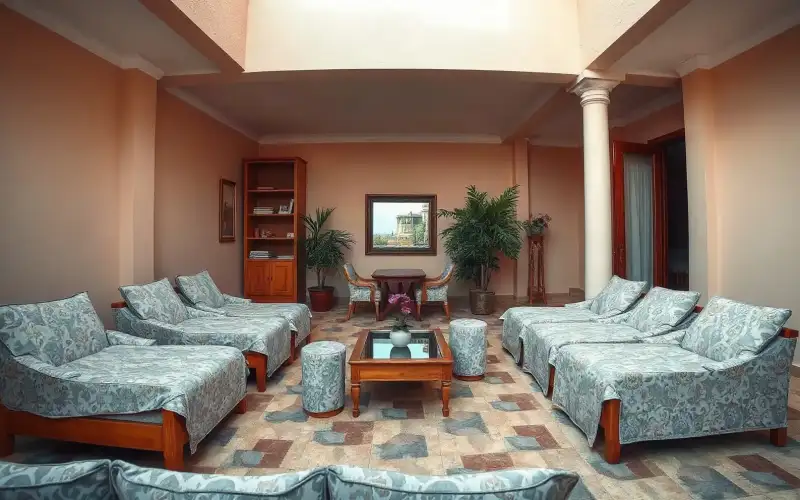
I arrived at a four-star family resort in Paphos last June expecting to find my eight-year-old daughter in a structured kids club while my wife and I finally had a quiet lunch. The 'kids club' turned out to be a teenage girl watching six children in a converted storage room with a television and a shelf of board games from 2015. No qualified staff. No schedule. No activities beyond whatever Netflix had on that afternoon.
This wasn't negligence—it was just the gap between what the hotel's website promised and what actually existed. The brochure had used phrases like 'supervised entertainment' and 'age-appropriate activities,' which technically weren't false. But they weren't what any parent would reasonably expect from a facility charging £180 per night.
That experience sent me down a rabbit hole. Over the past three years, I've visited or interviewed parents about kids clubs at more than 35 family-oriented hotels across Cyprus. What I found was staggering: there's almost no standardisation. Hotels use the term 'kids club' to describe everything from a professional, all-day programme with trained childcare workers to what amounts to a babysitting service with minimal oversight.
The Three Tiers of Kids Clubs in Cyprus
Tier One: The Luxury Full-Service Model
At the top end, you'll find resorts like those in Limassol's five-star corridor and a handful of properties in Paphos that operate genuine kids clubs. These typically run from 9 a.m. to 6 p.m., sometimes with evening sessions. Staff are trained childcare professionals, often with early years qualifications or tourism-specific training. Activities are structured and age-segmented—toddlers separate from school-age children, who are separate from teenagers.
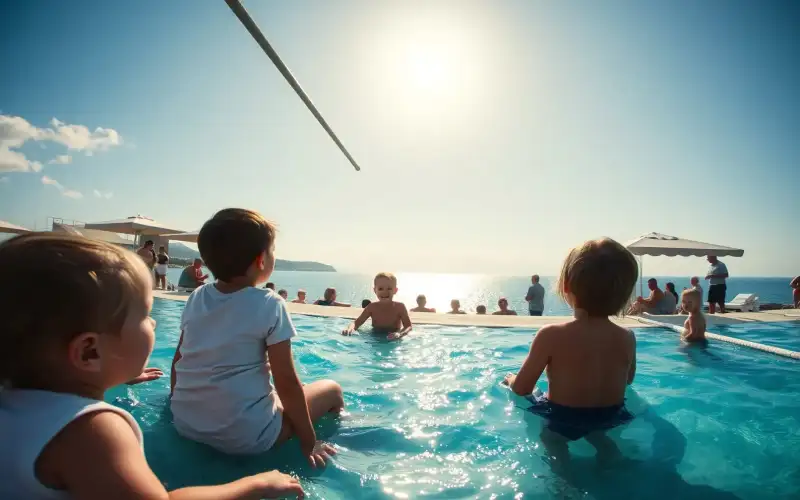
The Anassa in Latchi and similar properties invest in proper equipment: craft supplies, sports facilities, supervised swimming pools with trained lifeguards, and planned outings. I observed a morning session at one Limassol resort where 12 children aged 5-8 were engaged in a supervised cooking activity, learning to prepare traditional Cypriot pastries with a qualified instructor. That's not cheap to run, and these hotels charge accordingly—usually £35-50 per child per day, or it's bundled into a premium all-inclusive package.
What makes Tier One work: clear daily schedules published in advance, staff-to-child ratios that meet or exceed local recommendations, background checks, and genuine activity planning. Parents receive daily updates. If your child has allergies or behavioural needs, staff have documentation and training. These clubs operate year-round or at least during peak seasons with consistent staffing.
Tier Two: The Seasonal Mid-Range Compromise
This is where most three- and four-star family hotels land. They operate a kids club during peak season (June to August, sometimes Easter and Christmas), but it's often skeletal in shoulder seasons. Staff might include a mix: one or two qualified childcare workers and several seasonal employees, sometimes university students earning summer money.
I visited a three-star property near Ayia Napa in July 2025 where the kids club ran from 10 a.m. to 1 p.m. and 4 p.m. to 7 p.m. with a two-hour gap for lunch. The staff included one woman with formal childcare training and two young employees with no formal qualification but decent common sense. The activities were simple—pool games, craft sessions, occasional beach trips—but genuinely supervised. No child was left alone. The ratio was roughly 1 adult to 8 children, which is acceptable for school-age kids in a contained space.
The catch: consistency. In May, the same hotel's 'kids club' was just a room with a television, staffed by whoever could spare time from housekeeping. Parents booking shoulder-season trips often don't realise this until they arrive.
Tier Three: The Label Without the Service
And then there's the third tier—hotels that use the term 'kids club' to describe something that barely qualifies as childcare. A room. A television. Maybe some toys. No scheduled activities. No trained staff. Sometimes it's genuinely just a space where parents can drop their children for a couple of hours while reception staff keep an eye on them.
I found this at budget two-star properties, some of which were transparent about it (calling it a 'kids room' or 'children's area'), and frustratingly, at a few four-star hotels that used deliberately vague language on their websites. One Larnaca property described its kids club as offering 'entertainment and supervision,' which sounded professional until I discovered it was a converted conference room with a sofa, a television, and a member of staff who checked in every 20 minutes.
The problem isn't that these facilities exist—some parents genuinely just want a safe space to leave their child for an hour while they have a treatment at the spa. The problem is the marketing language that suggests something more professional than it is.
What You Actually Need to Know Before Booking
The Questions Hotels Don't Want You to Ask
When you email a hotel about their kids club, you'll get a glossy response full of words like 'fun,' 'engaging,' and 'professional.' Here's what you should ask instead:
- Is the kids club open every day during my stay, and what are the exact hours? Get this in writing. Seasonal closures are common but rarely highlighted in booking descriptions.
- What are the staff-to-child ratios? For children under five, aim for 1:4 or better. For ages 5-12, 1:8 is acceptable. Anything higher is understaffed.
- Do staff have formal childcare qualifications or training? Ask for specifics. 'Experienced with children' is not the same as 'trained in safeguarding and first aid.'
- What happens if my child becomes unwell or distressed? Who contacts you? How quickly? Where is the nearest medical facility?
- Are activities scheduled in advance? Request a sample daily schedule. If they can't provide one, they're probably not planning activities.
- Is swimming supervised by a qualified lifeguard? This matters. A childcare worker watching kids in a pool is not the same as a trained lifeguard.
- What's the age range? Some 'kids clubs' mix 18-month-olds with 12-year-olds, which doesn't work developmentally.
- Is it included in the room rate or charged separately? And if charged separately, what's the actual cost per day or per hour?
Red Flags in Hotel Descriptions
Certain phrases should make you pause and dig deeper. 'Children's entertainment' is vague—it could mean a trained programme or a man in a costume once a week. 'Supervised play area' might just mean a room with a staff member present, not active engagement. 'Available upon request' is a massive red flag; it suggests the club doesn't run on a set schedule and might not be staffed consistently.
Hotels that don't mention staff qualifications, activity schedules, or age groupings are usually hiding something. The good ones lead with these details because they're genuinely proud of their provision.
The Reality of Cyprus Regulations
Here's something most parents don't know: Cyprus doesn't have strict national licensing standards for hotel kids clubs. There are guidelines and recommendations from the Cyprus Hotel Association, but enforcement is loose. A hotel doesn't need a specific permit to call something a 'kids club.' This is why standards vary so wildly.
Local regulations require basic things—fire safety, first aid availability, staff background checks—but these are minimums, not measures of quality. A kids club can technically be compliant with regulations and still be pretty mediocre.
This puts the burden entirely on you as a parent to verify what you're getting. Don't assume a four-star rating means a four-star kids club. Hotel stars are based on room amenities and facilities, not childcare quality.
What Different Types of Hotels Typically Offer
| Hotel Type | Typical Kids Club Hours | Staff Qualifications | Age Range | Cost |
|---|---|---|---|---|
| Five-star all-inclusive | 9 a.m.–6 p.m. daily, sometimes evening sessions | Trained childcare professionals, often multiple staff | Usually segmented (toddlers, 5-8, 9-12, teens) | Included or £40–60/day |
| Four-star family resort | 10 a.m.–1 p.m., 4–7 p.m., seasonal | Mixed—one trained staff plus seasonal helpers | Ages 4–12, sometimes combined | Included or £25–40/day |
| Three-star family hotel | Summer only, 10 a.m.–1 p.m., 4–7 p.m. | Often no formal qualifications, supervised by reception | All ages combined | £15–25/day or small fee |
| Budget/two-star | Sporadic, usually just mornings or afternoons | Minimal or none—often just a staff member watching | All ages | Free or £5–10/day |
What I've Learned From Three Years of Research
The best kids clubs I've encountered share certain characteristics. They publish their daily activities in advance—not vague promises, but actual schedules. They segment children by age because a five-year-old and a twelve-year-old have completely different needs. They have proper equipment and space, not just a room with a television. They keep parents informed with daily updates, even if it's just a quick note about what your child did that morning.
The worst ones share characteristics too: vague marketing language, inability to answer specific questions, staff who seem overwhelmed, no clear schedule, and parents who discover on arrival that the club doesn't operate the way it was described.
One parent I spoke to booked a 'five-star family resort' in Paphos based on its kids club description. When she arrived in August, she found the club was closed for renovation. The hotel offered no alternative childcare and no compensation. She'd booked specifically for the kids club. This hotel still uses the same description on its website.
That story encapsulates the problem. Hotels know parents make booking decisions partly based on kids club quality, but there's no real accountability if what you get doesn't match what was promised.
Making Your Decision
If a kids club is important to your holiday, treat it like you'd treat any other significant service. Ask questions. Request evidence—a schedule, staff information, photos of the facility. Call the hotel directly and speak to someone who actually works there, not just the booking team. Ask if you can speak to parents who've recently used the club.
Don't assume that because a hotel is expensive, its kids club is good. I've found excellent kids clubs at three-star properties and mediocre ones at five-star resorts. Price doesn't correlate directly with quality in this area.
And be honest with yourself about what you actually need. If you want your children genuinely occupied and engaged in structured activities, you need Tier One. If you just want a safe space to leave them for an hour while you have a massage, Tier Two or even Tier Three might be fine—as long as you know that's what you're getting.
The gap between what Cyprus hotels market and what they actually deliver in kids clubs is real. But it's navigable if you ask the right questions and don't rely on brochure language to make your decision. Your holiday will be better for it.
Comments (5 comments)