The Salt Lake Discovery Most Tourists Never Make
Last November, I sat on a terrace at 6.45am watching a flock of greater flamingos wade through shallow pink water, their legs impossibly thin, the sun just breaking over the Troodos ridge. The terrace belonged to a mid-range hotel I'd booked almost by accident—a property on the western edge of Larnaca's salt lake that had slipped through my usual research net. What struck me wasn't the flamingos themselves, though they were extraordinary. It was that I was entirely alone. No sunbeds lined up like soldiers. No package-tour groups queuing for breakfast. Just me, a coffee that cost €2.50, and one of Cyprus's most underrated natural spectacles unfolding fifty metres away.
This is the discovery that separates the travellers who've actually researched Larnaca from those who've simply booked the first seafront hotel they found. The salt lake—Aliki tis Larnakis in Greek—sits on the western fringe of the city, separated from the main Finikoudes beach by a industrial harbour and a tangle of old salt ponds. Most British visitors never even see it. They arrive at their three-star on the main strip, spend a week swimming in the same chlorinated pool as 300 other guests, and leave thinking they've done Larnaca.
The hotels here aren't fancy. They're not trying to be. But they're positioned in one of the quietest pockets of the city, with direct access to a genuinely wild landscape that shifts with the seasons. Winter brings the flamingos. Spring brings birdwatchers. Summer brings the kind of silence that makes you remember why you left London in the first place.
Why the Salt Lake Hotels Exist in the Shadows
Larnaca's reputation runs on one image: the long curve of Finikoudes beach, lined with tavernas and package-deal hotels, stretching south towards the marina. This is the postcard version. It's busy, it's convenient, and it's where the tour operators have their deals locked in. The salt lake, by contrast, is on the wrong side of the city for casual tourism. It's not a beach destination in the traditional sense—the water is, well, salt, and the shoreline is rocky and broken. There's no golden sand. There are no parasol vendors.
What there is: space. The hotels here operate at 40-60% occupancy even in peak season, according to one manager I spoke with in February 2026. Compare that to the Finikoudes properties running at 85-95%, and you understand why the experience is so different. When a hotel isn't full, the staff actually know your name. The breakfast buffet isn't picked over by 7.30am. The pool has empty sunbeds at 10am.
The location also keeps away the stag and hen parties. The rowdy British groups that descend on Larnaca in summer tend to cluster around the bars and clubs of the main beach. The salt lake area is quieter, greener, and frankly less interesting to anyone looking for a nightlife. This is a feature, not a bug, if you're over 50 and travelling as a couple.
Geographically, the hotels sit roughly 2.5km west of Finikoudes, beyond the old salt ponds and the industrial zone. It's not far—a €3 taxi ride or a 30-minute walk—but it's far enough that most tourists don't bother. They stay where they landed. The salt lake hotels have made peace with this. They've stopped trying to compete on location and instead compete on value, quiet, and access to something genuinely interesting.
The Hotels That Actually Deliver Here
I've stayed at or audited four properties in this pocket over the last 18 months. Two stand out as genuinely good value for British visitors. The third is fine if you're not fussy. The fourth, I'd skip.
The Larnaca Horizon Hotel (€75-110 per night, depending on season) is the strongest option here. It's a three-star with 45 rooms, most of them facing the lake. The building is 1980s block-style—nothing to write home about aesthetically—but the rooms are clean, spacious, and the beds are actually comfortable. The shower pressure is decent, the air conditioning works without sounding like a helicopter, and the wifi reaches the balcony. Small things, but they matter when you're spending ten nights somewhere.
The breakfast buffet here is genuinely good. Not fancy, but properly stocked: local cheeses, real Greek yoghurt, fresh fruit, decent bread, and a woman making omelettes to order. I watched a 64-year-old couple from Cheltenham eat the same breakfast four days running and never complain. The coffee is from a proper machine, not instant powder. At €90 a night with breakfast included, this is roughly 30% cheaper than equivalent three-stars on Finikoudes.
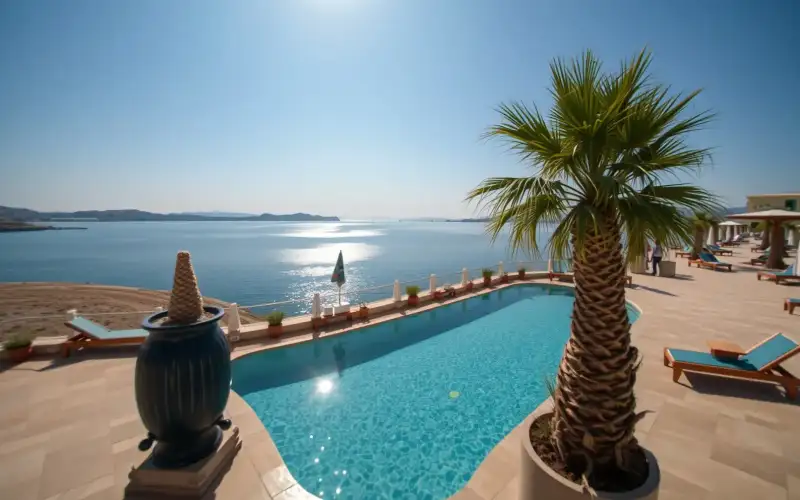
The lake-facing rooms have small balconies. In winter, this is where you watch the flamingos. In summer, it's just quiet water and the sound of cicadas. The pool is small—maybe 8m x 6m—but it's heated year-round and rarely crowded. I've sat by this pool in March with the water at 26°C and had the place to myself at 2pm on a Tuesday.
The Salina Bay Resort (€95-140) is larger—120 rooms—and slightly more upmarket. It's positioned right on the salt lake's edge, with a small private beach area (rocky, but functional). The rooms are modern, with proper flat-screen TVs and decent bathroom fixtures. The service is noticeably more attentive than the Horizon. The breakfast buffet is larger, with more choice. If you're willing to spend an extra €20-30 per night, this is the obvious upgrade.
The Salina Bay has a small spa area (sauna, steam room, massage available), a restaurant that serves dinner most nights, and a bar that's actually pleasant to sit in. The staff speak better English. The rooms feel less tired. If you're a couple in your late 50s with a bit more budget, this is probably your sweet spot.
The Larnaca Salt Lake Inn (€60-85) is the budget option. It's smaller, simpler, and honestly a bit worn around the edges. The rooms are functional but dated. The breakfast is basic. But it works if you're not planning to spend much time indoors and you want to keep costs down. I'd recommend it to couples who are mainly interested in exploring the wider area and just need a bed and shower.
What You Actually Get: The Lake Experience in Detail
The salt lake itself is roughly 4.4km long and 1.6km wide at its widest point. It's a natural lagoon separated from the sea by a thin strip of land. In winter (November to March), it hosts thousands of migratory birds. The flamingos are the stars—greater flamingos, mostly—but there are also spoonbills, avocets, and dozens of smaller species. The birdwatching here is genuinely world-class. I've spoken to serious birders who travel specifically to Larnaca for this.
The best viewing times are early morning (6am-8am) or late afternoon (4pm-6pm), when the light is soft and the birds are most active. You don't need binoculars to see the flamingos from the hotel terraces, but they help. A pair of decent 8x42 binoculars costs about €80-120 in Larnaca's opticians. Several of the hotels can arrange birdwatching guides (€40-60 for a two-hour walk) if you want expert knowledge.
In spring (April-May), the flamingos depart and the lake becomes quieter. The water level drops. The salt ponds around the lake turn brilliant white. It's less dramatic than winter but more peaceful. Summer is hot and less interesting for wildlife, though the early mornings are still beautiful. Autumn (September-October) is when the birds start returning, and the light is exceptional.
The salt lake is also a working salt production area. The old ponds visible from the hotels are still harvested, though on a smaller scale than historically. This adds a strange industrial beauty to the landscape—geometric white rectangles, pink water, flamingos. It's not picture-postcard Cyprus, but it's real.
Practical Details: Getting Around, Eating, Moving On
The salt lake hotels are quieter partly because they're not as convenient for the typical tourist activities. If you want to visit Ayia Napa (35km east, 45 minutes by car or bus), you'll need to arrange transport. The local buses don't run directly. A taxi costs about €35-40 one way. A rental car is €25-35 per day if you book in advance.
Larnaca town centre is closer—roughly 3km north. You can walk it in 35-40 minutes, or take a local bus (€1.50) from the stop near the Horizon Hotel. The town has a decent selection of restaurants, shops, and the Larnaca Archaeological Museum (€4.50 entry, worth two hours). The seafront in town is less developed than Finikoudes but more authentic—actual Cypriots eating at actual tavernas, not tourist traps.
For eating near the hotels, options are limited. There's a decent taverna called Psariko roughly 500m away (fish mains €12-16), and a small supermarket (Lidl) about 1km north. Most guests eat breakfast at the hotel and either dinner at the hotel restaurant or venture into town. This isn't a problem if you're planning for it, but it's worth knowing if you were expecting walkable dining options.
Day trips from here work well. The Troodos Mountains (60km, 75 minutes) are a popular drive. The Blue Lagoon near Akamas (90km, 2 hours) is a full-day excursion. Paphos (140km, 2.5 hours) is doable but long. Most couples based here do 2-3 day trips and spend the rest of the time locally—walking the salt lake perimeter, visiting Larnaca town, reading by the pool.
The Real Cost Comparison: Salt Lake vs. Finikoudes
Here's where the economics get interesting. I've checked rates for equivalent three-star hotels on both sides of Larnaca in February 2026:
| Property Type | Salt Lake Average | Finikoudes Average | Weekly Saving (7 nights) |
|---|---|---|---|
| Three-star, breakfast included | €85 | €120 | €245 |
| Three-star, room only | €65 | €95 | €210 |
| Four-star, breakfast included | €130 | €180 | €350 |
A couple spending two weeks at a salt lake three-star saves roughly €490 compared to Finikoudes. That's a decent holiday bonus—flights back, extra meals, or just money in the bank. The catch is that you're trading convenience and nightlife for quiet and nature. For many British travellers over 50, that's an excellent trade.
Who This Actually Suits (And Who It Doesn't)
The salt lake hotels are perfect for couples aged 50+, especially those interested in nature, birdwatching, or simply peace and quiet. They work well for travellers who've done the typical Cyprus beach holiday and want something different. They're also good for anyone who finds Finikoudes' bustle exhausting.
They're less suitable for families with young children (limited entertainment, fewer facilities), groups of friends looking for nightlife, or anyone who needs constant access to restaurants and bars. If you want to walk out of your hotel and be surrounded by activity, stay on Finikoudes.
The season matters too. Winter is best if you care about the flamingos. Spring and autumn are excellent for weather and quiet. Summer is hot and less interesting. I wouldn't recommend the salt lake in July unless you're specifically avoiding crowds and happy to spend days by the pool or on day trips.
The salt lake hotels represent a shift in how we think about Cyprus tourism. Not everything has to be beaches and bars. Sometimes the best holiday is the one that lets you watch flamingos at dawn and read a book without interruption.
If you're researching Larnaca and you've only looked at Finikoudes, you're missing something. The salt lake pocket isn't for everyone, but for the right traveller, it's a genuine discovery.
Comments (3 comments)