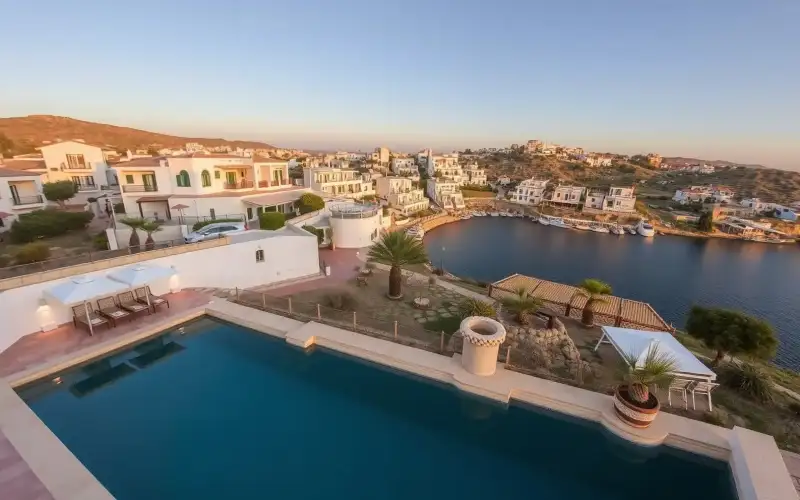
I arrived at a 16-room property in the Troodos Mountains on a Wednesday afternoon in March 2025, exhausted from the usual airport-to-resort grind. The owner, a former banker from Nicosia, had converted a traditional stone village house into something quietly extraordinary. No reception desk, no key cards—just a handwritten welcome note and a glass of local Commandaria wine waiting on the terrace. Within two hours, I'd forgotten the crowds at Paphos entirely.
That experience crystallized what I'd been observing across Cyprus's hospitality landscape: the boutique hotel segment has matured dramatically. Where five years ago you'd struggle to find more than a handful of genuinely distinctive small properties, 2026 now offers British travellers a genuinely compelling alternative to the three-star chains and mega-resorts that dominate the island.
Why Boutique Hotels Matter in Cyprus
Cyprus receives roughly 3.9 million visitors annually, with the vast majority funnelling into Paphos, Limassol, and Ayia Napa. The economics are straightforward: a 400-bed resort generates more revenue per square metre than a 20-bed boutique property. But that volume comes with predictable trade-offs—standardized breakfasts, impersonal service, and the constant background hum of package-tour logistics.
Boutique hotels operate on different principles. A property with 12–30 rooms can afford to know your name, remember that you prefer Earl Grey to coffee, and adjust dinner reservations without consulting a computer system. The design philosophy differs too: rather than maximizing occupancy, these properties maximize experience. That means fewer guests, higher staffing ratios, and genuine attention to architectural detail.
The pricing structure often surprises British travellers. You might expect a 16-room luxury property to charge £250–£350 per night. In reality, many boutique hotels in Cyprus position themselves between mid-range chains (£80–£140) and five-star resorts (£400+), landing at £140–£220 per night for a double room in high season. That 30–40% premium over a Hilton or Marriott buys you dramatically better service, often a better location, and zero conference groups.
The Paphos Region: Coastal Boutique Stays
Paphos remains the primary entry point for British visitors, and the boutique hotel landscape here has evolved considerably. The challenge is finding properties that offer genuine tranquility without the four-hour drive to Troodos.
The Akamas Peninsula, stretching north from Paphos town, holds several promising options. One 18-room property near Latchi village occupies a renovated traditional stone mansion with direct beach access. Double rooms run £165–£195 in April–May, climbing to £210–£240 in July–August. The property sources 70% of vegetables from its own garden and offers cooking classes twice weekly. Breakfast is included; dinner (optional) averages £28–£35 per person. That's notably cheaper than the Paphos town centre restaurants, where a decent mezze for two runs £45–£60.
Moving south toward Polis Chrysochous, a 12-room converted village house sits 800 metres from the beach, surrounded by olive groves. Rooms here range from £130 (May–June) to £185 (August). The owner, a British-Cypriot couple, have maintained the original stone walls and wooden beams while installing underfloor heating and rainfall showers. No pool—intentional, they say—but the sea is a short walk away. Many guests spend their days at nearby Chrysochous Beach (quieter than Lara, 15 minutes south) and return for evening drinks on the terrace.
Within Paphos town itself, options are limited. The historic centre near the castle has one 14-room property occupying a restored Venetian-era building. Rates are £155–£190 year-round; the location means you're walking distance to restaurants, the archaeological museum, and the harbour, but you'll hear some street noise in summer evenings. This suits travellers who want cultural immersion over isolation.
Troodos Mountains: Altitude and Authenticity
The Troodos range, rising to 1,952 metres, offers something Cyprus's coastal regions cannot: genuine coolness. In August, when Paphos hits 35°C, Troodos villages sit at 22–24°C. This alone justifies the 90-minute drive from Paphos airport.
The village of Omodos, famous for its wine co-operative and lace shops, hosts a 10-room property in a restored 18th-century stone building. Rooms cost £125–£160 in shoulder seasons, £180–£210 in peak summer (July–August). The owner sources wine from three local producers and offers evening tastings (£15 per person, including four wines and light mezze). Breakfast includes homemade pastries from a local bakery. The village itself has perhaps 200 permanent residents; you can walk the entire perimeter in 30 minutes.
Further north, the village of Kakopetria has two boutique options. The larger, with 16 rooms, occupies a converted mill alongside a mountain stream. This property attracts hikers and couples seeking quietness; there's a small library, a wood-burning fireplace (essential in winter), and no television in rooms. Rates are £110–£140 in April–May, rising to £165–£190 in July–August. The smaller property, just eight rooms, is actually a collection of restored traditional cottages scattered through the village. This setup appeals to families or groups; a two-bedroom cottage costs £220–£280 per night. Both properties are closed November–February due to snow and reduced demand.
The Platres area, Cyprus's oldest mountain resort, has one 20-room property that's worth the detour. Built in 1962 as a private residence and converted in 2018, it retains period details—marble staircases, original tilework—while adding modern comforts. Double rooms run £145–£175 in spring, £195–£240 in summer. The property sits on 2.5 acres with woodland walks and a small pond. Breakfast is exceptional: fresh juices, local cheeses, and pastries from the village bakery. Evening meals (optional) average £32–£40 per person.
Larnaca and the South: Emerging Alternatives
Larnaca typically ranks below Paphos and Limassol in British traveller preference, which creates opportunity. One 15-room property in the old town overlooks the marina and occupies a restored 1930s colonial building. Rooms are £130–£160 in shoulder seasons, £180–£210 in peak summer. The location is superb for exploring the salt lakes (birdwatching in winter) and the Hala Sultan Tekke mosque. Street-level restaurants and bars mean evening activity without the resort-bubble feeling.
South of Larnaca, the Kiti area has one 12-room property set back from the beach in a quiet village. This is genuinely off-the-beaten-path territory; many British travellers have never heard of Kiti. Rates are £95–£130 year-round, significantly cheaper than comparable Paphos properties. The trade-off is isolation: you'll need a car, and the nearest significant restaurant is 8 kilometres away. The property compensates by offering excellent dinners on-site (£25–£30 per person).
Practical Booking and Logistics
Boutique hotels in Cyprus rarely appear on the major OTA platforms (Booking.com, Expedia). Most operate their own websites or use specialist aggregators like Mr and Mrs Smith or Tablet Hotels. Commission structures explain this: a 400-bed resort can afford to pay Booking.com 15–18% commission; a 16-room property cannot. This means direct booking is often cheaper. A room listed at £160 on the property's website might appear at £180 on Booking.com (the extra £20 covers the OTA's commission, which the property absorbs).
Airport transfers are essential. Paphos Airport is 50 kilometres from Paphos town; a taxi costs £55–£75, a rental car £30–£45 per day. Many boutique hotels include transfers for stays of three nights or longer. Confirm this when booking; it's often negotiable even if not advertised.
Booking windows matter significantly. Spring (April–May) and autumn (September–October) offer the best value—typically 20–30% cheaper than peak summer—with excellent weather. Summer (July–August) sees rates spike 40–50% and properties fill 60–70 days in advance. Winter (November–February) is quiet, with rates 30–40% below peak, but several Troodos properties close entirely.
Common Booking Mistakes
First, assuming all boutique hotels offer the same experience. A 10-room traditional village property differs fundamentally from a 28-room design-forward modern property. Read guest reviews carefully, focusing on comments about noise levels, breakfast quality, and staff responsiveness. One negative review mentioning

Comments (4 comments)