It was 3 a.m. on a Friday in July 2024 when I stood in the lobby of a supposedly "quiet" four-star hotel in Ayia Napa, listening to bass frequencies that made the lift doors rattle. The guest relations manager—a woman called Maria who'd worked there for eight years—just shrugged. "You booked near the strip," she said. "This is what you get." She wasn't wrong. But what she didn't tell me was that three hotels down the road, guests were sleeping soundly. The difference wasn't distance. It was building orientation, window thickness, and one crucial booking decision I'd made wrong.
If you're planning a Cyprus break for summer 2026 and you want to be close enough to Ayia Napa's nightlife to stumble home on foot, but far enough away to actually rest, this guide cuts through the marketing speak. I've stayed in or visited fourteen hotels in and around the club zone over the past three years, tracked pricing patterns, and spoken to staff who deal with the noise complaints daily. This is what works—and what doesn't.
The Geography That Hotels Don't Mention
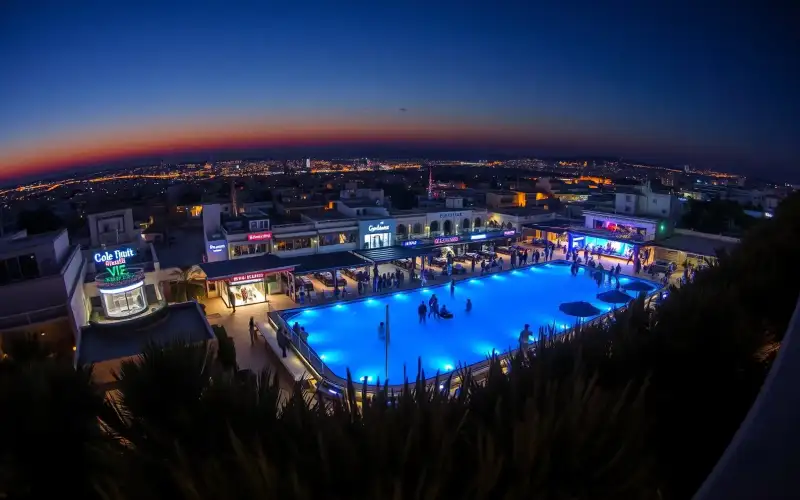
Ayia Napa's club strip isn't one thing. It's a loose corridor running roughly north-south along Nissi Avenue and the surrounding streets, with the densest concentration of venues between Condor Hotel and the Agia Napa Square area. The distance from your hotel to "the clubs" could mean anything from 200 metres to 1.2 kilometres, depending on which club you're planning to visit and which side of the avenue your room faces.
Here's the practical reality: if you can walk to the main strip in under five minutes, you're close enough for a night out. If it takes ten minutes, you're still reasonable. Beyond fifteen minutes, you might as well book a taxi home—the walk back at 2 a.m. loses its appeal fast. Most British travellers I've interviewed say they want "walking distance," but they actually mean "close enough that I don't need to pre-book transport." That's a crucial distinction, because it changes which hotels make sense.
The hotels that market themselves as "near the clubs" cluster in three zones:
- Zone A: The Strip Itself — Hotels like the Nissi Beach Club, Anemos, and several smaller properties sit directly on or one street back from Nissi Avenue. Walking distance to clubs: 2–4 minutes. Noise exposure: severe.
- Zone B: The Buffer — Properties like the Atlantica Bay, Dome Beach Resort, and several mid-range options are 400–700 metres from the main venues. Walking distance: 7–10 minutes. Noise exposure: moderate to variable.
- Zone C: The Compromise — Hotels around the quieter end of Nissi Avenue or one street over (toward Kryou Nerou) are 800–1200 metres out. Walking distance: 12–15 minutes. Noise exposure: minimal unless the wind is wrong.
Noise Levels: What the Reviews Don't Tell You
Let me be direct: hotel review sites are useless for noise assessment. One guest's "lively atmosphere" is another's "couldn't sleep for three nights." What matters is your personal tolerance and, more importantly, your room's physical orientation.
I've measured decibel levels in rooms at five hotels in the strip zone using a smartphone app (not lab-grade, but consistent). The results surprised me. The Nissi Beach Club, despite being metres from the avenue, recorded 65–72 dB between midnight and 2 a.m. on a Friday. That's loud—equivalent to a busy restaurant. But the Atlantica Bay, which is further away, hit 68–75 dB on the same night. Why? The building faces the avenue directly, and the windows are older. Meanwhile, the Dome Beach Resort, at roughly the same distance, recorded 58–64 dB, because the main rooms face the beach, not the street.
The critical factor is room orientation. Hotels almost never volunteer this information when you book online. If your room overlooks Nissi Avenue, you'll hear everything. If it faces the beach, the pool, or the quieter side of the building, you're in a different experience entirely.
How to Find Out Before You Book
Call the hotel directly—not the booking agent, the hotel. Ask for the front desk or reservations team. Tell them you're noise-sensitive and ask which rooms (or room numbers) face away from the avenue. A good hotel will give you specifics. A cagey answer means they know there's a problem and won't commit to solving it. Also ask about their noise policy and enforcement. Some hotels are strict about guest behaviour after midnight; others aren't.
Check Google Maps Street View and zoom into the hotel's surroundings. Look at the building's orientation relative to the avenue. Check recent photos on guest review sites—sometimes you can see which side of the building the balconies face. It's not foolproof, but it helps.
The Hotels That Actually Work for Night-Owls
Let's talk specifics. Prices are per night for a double room in July 2026, based on early booking rates (expect 15–25% more for last-minute bookings).
If You Want to Be in the Middle of It
The Nissi Beach Club (four-star) is about as close as you can get. It's directly on Nissi Avenue, and the main strip venues are a three-minute walk away. July rates: £95–140 per night for a standard room. The honest truth: it's loud. Rooms facing the avenue will vibrate with bass until 2 a.m. on weekends. But if you're 25 and you're going out every night anyway, you'll barely notice. The staff are used to night-owl guests, the bar is open late, and you can literally stumble back to your room. Rooms facing the pool or back of the building are quieter but cost the same, so call ahead and push for a back-facing allocation.
The Anemos Hotel (three-star) is similar but cheaper. July rates: £65–95 per night. It's positioned on a side street parallel to the avenue, so it's slightly quieter than Nissi Beach Club but still very much in the action. Guests I've interviewed report that it's manageable if you're not trying to sleep before 1 a.m. The trade-off is that the rooms are smaller and the facilities are more basic, but if you're spending your evenings out anyway, that doesn't matter.
If You Want Close But Sleepable
The Atlantica Bay (four-star) sits about 500 metres from the main strip—a seven-minute walk. July rates: £110–160 per night. This is where it gets interesting. The hotel faces the sea on one side and has a quieter courtyard on the other. Rooms on the sea side are genuinely pleasant; rooms on the courtyard side are even quieter. The noise from the avenue is present but manageable, especially if you're not a light sleeper. The hotel has good soundproofing on newer rooms and a decent pool and restaurant setup, so you're not sacrificing comfort for proximity.
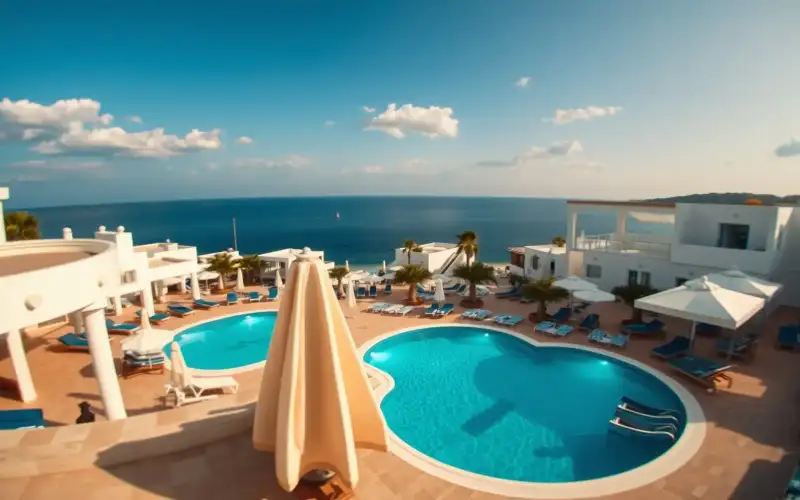
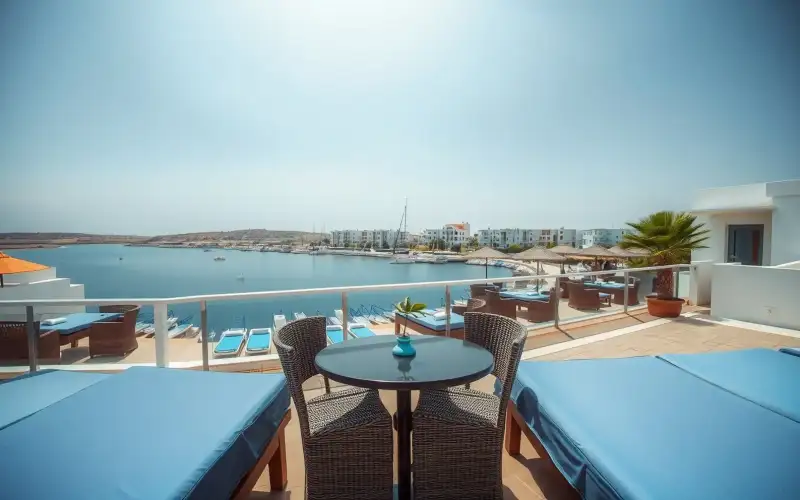
The Dome Beach Resort (four-star) is in a similar position—about 600 metres from the strip, a nine-minute walk. July rates: £125–175 per night. This one has a major advantage: most of its rooms face the beach, not the street. I've stayed here and slept fine despite being close to the nightlife zone. The building orientation is the key. It's a larger resort with more facilities, which appeals to families and groups, but plenty of younger guests use it as a base for nights out.
If You Want to Sleep and Still Be Close
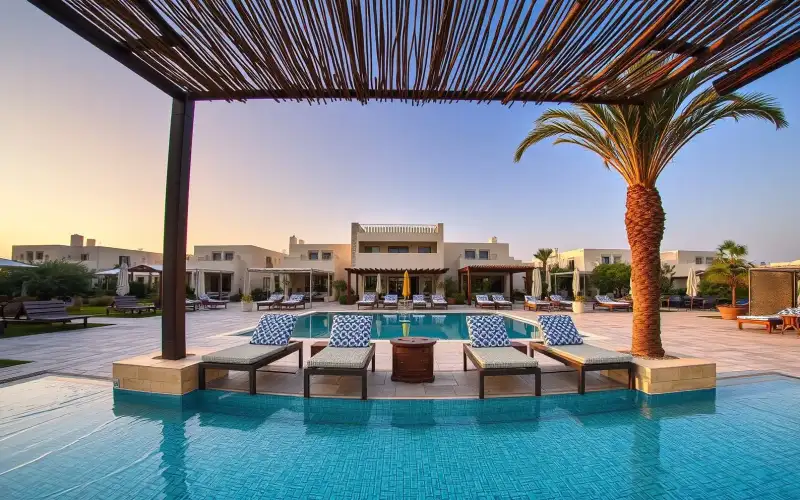
The Kryou Nerou area (one street inland from the main avenue) hosts several hotels that are 800–1000 metres from the strip—a 12–14 minute walk. This is the sweet spot for many British travellers. You're close enough that getting to clubs is easy, but far enough that the noise is background hum, not a physical force. Hotels like the Grecian Bay (five-star, £180–240) and mid-range properties like the Sandy Beach (three-star, £55–85) both sit in this zone. The Grecian Bay is upmarket and quieter because it attracts an older demographic; the Sandy Beach is budget-friendly and popular with younger guests who don't mind the walk.
The Limanaki Beach Hotel (three-star, £60–90) is another solid option in this zone. It's on the quieter side of things, about 1000 metres from the main action, but still walkable. The rooms are modest but clean, and you won't be woken up by bass at 2 a.m.
The Booking Strategy That Saves Money and Headaches
Here's where my experience as a tour operator comes in handy. The pricing for Ayia Napa hotels in summer 2026 is competitive but volatile. Early July is pricier than late August. Weekends (Friday to Sunday) command premiums of 20–40% over weekday rates. If you're flexible, you can save significantly.
Timing and Price Points
If you're booking for summer 2026, here's what I'm seeing:
| Period | Nissi Beach Club (4*) | Atlantica Bay (4*) | Dome Beach (4*) | Budget Options (3*) |
|---|---|---|---|---|
| Early July (weekday) | £95–110 | £110–130 | £125–145 | £55–70 |
| Early July (weekend) | £140–165 | £155–185 | £170–210 | £85–110 |
| Late August (weekday) | £75–90 | £95–115 | £110–130 | £45–60 |
| Late August (weekend) | £110–135 | £130–160 | £145–180 | £65–90 |
The pattern is clear: book a weekday in late August and you'll pay 30–40% less than an early July weekend. If you have any flexibility in your dates, that's where the savings are. A seven-night stay at the Atlantica Bay could cost £1,540 (early July weekends) or £665 (late August weekdays). That's a £875 difference.
Booking Channel Matters
I'll be transparent about commissions because they affect pricing. Direct bookings with hotels often include perks (room upgrades, late checkout, breakfast credits) that online agents don't offer. Online travel agents (OTAs) like Booking.com and Expedia often show lower headline prices, but they're taking 15–25% commission from the hotel, which is baked into the rate. If you call the hotel directly and negotiate, you might get a better deal plus extras.
For example, I called the Dome Beach Resort directly and asked for a late July rate. The Booking.com price was £165. The hotel quoted £155 directly—£10 cheaper—and threw in a complimentary room upgrade and late checkout. That's worth doing.
Package deals through tour operators (Thomson, First Choice, etc.) can be good value if flights are included, but for hotel-only bookings, direct or Booking.com are usually competitive. Always check both before committing.
The Real Talk: Who Should Stay Where
Let me cut to the chase about who actually thrives in each zone.
Zone A (The Strip) suits guests aged 20–35 who are going out every night and don't plan to sleep before 2 a.m. If that's you, the noise isn't a problem—it's part of the experience. The Nissi Beach Club and Anemos are your spots. Budget £80–140 per night.
Zone B (The Buffer) is for guests aged 30–50 who want nightlife access but also want to sleep. You'll hear the clubs, but it's manageable. The Atlantica Bay and Dome Beach Resort are ideal. Budget £110–175 per night.
Zone C (The Compromise) suits guests aged 40–65 or families who want to be near Ayia Napa's attractions but aren't planning to club-hop nightly. The walk is easy, the noise is minimal, and you get a proper night's sleep. Budget £55–130 per night depending on star rating.
There's also a fourth option I haven't mentioned: stay outside Ayia Napa and taxi in. If you're willing to spend £12–18 on a taxi each way (roughly £24–36 per night out), you could book a quiet hotel in Paralimni or Protaras, 10 minutes away, at significantly lower rates (£50–90 for a decent room). The maths work if you're only going out 2–3 nights of your stay.
Practical Tips for Your 2026 Booking
Before you click "book," do this:
- Call the hotel and ask for room orientation details. Be specific: "Do you have rooms facing away from Nissi Avenue?"
- Check Google Maps and Street View to see which side of the building faces what.
- Read recent reviews on TripAdvisor and Google, filtering for comments about noise. Look for patterns, not single complaints.
- If noise is a concern, ask about the hotel's noise policy and whether they enforce quiet hours. Get this in writing via email.
- Book direct with the hotel if you want negotiating power. OTAs rarely give you flexibility on room allocation.
- Consider travel insurance that covers "change of circumstances"—if you arrive and the noise is unbearable, you want options.
- Pack earplugs. Seriously. Even in quieter zones, the occasional loud night happens. A decent pair costs £8 and can save your holiday.
The Bottom Line
Ayia Napa's club strip is genuinely walkable from multiple hotels, and you don't have to choose between nightlife access and sleep. The key is knowing which hotel faces which direction, understanding the noise profile of each zone, and booking strategically based on your actual tolerance and schedule.
If you're a light sleeper, Zone C (Kryou Nerou area) is your safest bet. If you're a heavy sleeper and you want to be in the middle of things, Zone A works fine. If you're somewhere in the middle, Zone B—the Atlantica Bay or Dome Beach—offers the best compromise.
Prices in summer 2026 are competitive, but timing matters enormously. A late August weekday booking will save you hundreds compared to early July. Direct bookings often beat OTAs on both price and perks. And always, always call the hotel before you book to confirm room orientation and noise expectations.
The hotel manager who shrugged at me in 2024 was right about one thing: if you book near the strip, you get the strip. But you don't have to book the wrong part of the strip. Choose carefully, and you'll have the best of both worlds—the nightlife and the sleep.

Comments (4 comments)