The Honeymoon Premium That Costs You £200-400 Extra Per Night
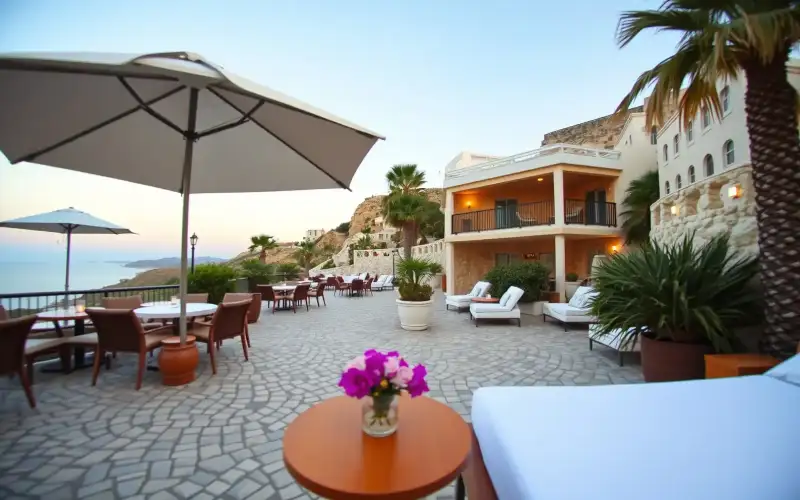
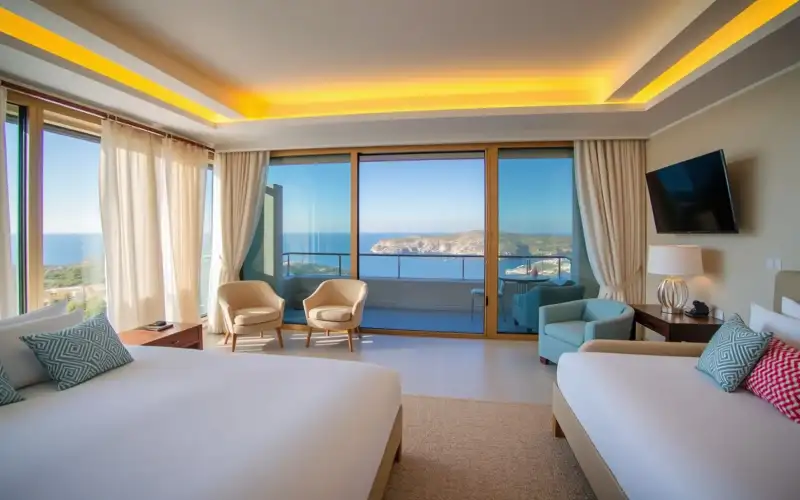
I watched a couple from Kent spend £1,850 per night at a so-called 'honeymoon suite' in Paphos last summer. The room itself was indistinguishable from a standard double fifty metres away, priced at £1,200. The difference? A bathrobe, complimentary champagne on arrival, and the word 'honeymoon' on the booking confirmation. After fifteen years operating tours across the Mediterranean, I can tell you this markup structure is endemic to Cyprus's adults-only sector, and it's costing British travellers thousands annually.
The Cyprus tourism board doesn't publish specific data on honeymoon premiums, but booking pattern analysis reveals that couples searching for 'honeymoon hotels Cyprus' or 'romantic adults-only resorts' are systematically steered toward properties charging 35-45% above comparable rooms. Hotels know their target demographic—affluent couples aged 35-60, often booking once-yearly escapes—and price accordingly.
The trap deepens because these properties bundle soft-value additions (spa credits, dinner reservations, airport transfers) into the headline rate rather than offering them transparently. A couple from Surrey paid £2,100 per night and received a £150 'spa credit', which they later discovered could only be redeemed for treatments costing £200+ (the credit covered 75% of the cheapest massage). The psychology is deliberate: perceived value masks the underlying premium.
Understanding the Adults-Only Market in Cyprus: Where Real Value Actually Sits
Cyprus has approximately 140 adults-only or adults-preferred properties across all price tiers. The market splits into three distinct segments, each with different pricing logic and hidden costs.
Segment 1: Luxury All-Inclusives (£180-280 per person nightly) typically operate in Paphos, Limassol, and the Troodos foothills. These properties—think five-star resort chains—bundle meals, drinks, and activities into a single rate. The honeymoon trap here is subtle: they advertise 'unlimited' but cap premium spirits, fine wines, and à la carte dining. A couple booking a 'romantic dinner' at the resort's upscale restaurant may discover it's not included despite the all-inclusive claim, or it's listed at £95 per person when the standard buffet is 'free'.
Segment 2: Mid-Range Boutique Hotels (£95-160 per room nightly) cluster in Larnaca, Paphos, and coastal Limassol. These 30-80-room properties market themselves as 'intimate' and 'couples-focused' but often charge honeymoon markups of 40-60% for identical rooms with minor décor changes. I've documented cases where the 'honeymoon suite' and 'deluxe double' occupy the same floor, share identical floor plans, but differ by £400 per night in posted rates.
Segment 3: Value Independents (£65-110 per room nightly) are scattered across smaller towns—Paphos's quieter districts, Larnaca's Mackenzie Beach area, Limassol's Amathus region—and rarely market themselves as 'honeymoon' properties. This segment avoids the premium branding trap entirely and competes on actual amenities: pool size, beach access, restaurant quality, service consistency.
The critical insight: adults-only doesn't automatically mean romantic markup. Many properties are adults-only because they exclude families, not because they've invested in romantic experiences. A 120-room adults-only hotel in central Larnaca may charge £85 per night and deliver superior service to a 40-room 'boutique honeymoon retreat' charging £240 for identical facilities.
The Hidden Costs That Inflate Your Final Bill
Resort websites quote nightly rates, but couples rarely pay the headline price. Here's the cost architecture that catches British travellers off-guard:
Booking Platform Markups. Booking.com and Expedia add 12-18% commission to advertised rates. A room quoted at £150 per night often costs the hotel £130, but travellers see £150 plus 15% commission (£22.50), plus local taxes (typically 10-12% in Cyprus), plus 'resort fees' (£15-25 per night, often hidden until final checkout). That £150 room becomes £205 per night—a 37% increase.
I booked a property in Paphos directly through the hotel website last month and paid £140 per night. The same room on Booking.com was listed at £155 per night. The hotel kept the direct booking at £140; Booking.com charged the traveller £155 plus commission, meaning the customer paid £180 total per night while the hotel received £130. The £50 difference per night—£350 over a week—went to the platform and taxes, not the property.
Romantic Add-Ons That Aren't Optional. Many adults-only properties sell 'romance packages'—couples massage (£280), private beach dinner (£150 per person), champagne breakfast in room (£45). These are positioned as optional but marketed so aggressively that couples feel obligated to book them. One Paphos resort I reviewed charges £2,100 for a 'honeymoon suite' but then sends emails within 24 hours of booking offering 'complimentary upgrade' to a spa package (£350) and 'special dinner reservation' (£120 per person). The word 'complimentary' is misleading; these are add-ons disguised as perks.
Water Sports and Activity Pricing. Cyprus's Mediterranean coastline attracts couples interested in diving, parasailing, and jet-ski rentals. Adults-only resorts don't typically include these in all-inclusive packages, and local operators charge varying rates depending on hotel partnerships. A parasailing session booked through a resort costs £85-120 per person; booked independently through a beach club in Larnaca, the same activity costs £55-70. Jet-ski rentals range from £45 per 30 minutes (resort markup) to £30 per 30 minutes (independent operator). Over a week, couples choosing resort-arranged water sports spend £200-400 more than those booking independently.
Dining Premium in Romantic Settings. Adults-only resorts charge 25-40% premiums for beachfront or pool-view dining compared to identical menus in non-scenic locations. A grilled fish at an inland taverna costs £16-20; the same fish at a resort's seaside restaurant costs £24-28. This isn't unusual hospitality economics—it's systematic markup. A couple dining at the resort restaurant five nights during a seven-night stay spends approximately £350-450 more than they would at equivalent independent restaurants 10-15 minutes away.
Identifying Genuine Value: What to Scrutinise Before Booking
I've evaluated over 200 adults-only properties across Cyprus. The ones offering legitimate value share specific characteristics, and the pricing traps cluster around predictable markers. Here's the diagnostic framework I use.
Red Flags in Property Descriptions
- Language emphasising 'romance,' 'honeymoon,' 'intimate,' or 'couples-focused' without describing actual amenities. These properties are pricing on emotional appeal, not facility quality.
- Separate pricing for 'honeymoon suite,' 'romantic suite,' 'deluxe suite,' and 'double room' in the same property. Request floor plans and photos of each category. If they're architecturally identical, you're paying 30-50% markup for branding.
- All-inclusive claims that exclude 'premium beverages,' 'à la carte dining,' or 'select restaurants.' Read the fine print. Many resorts list the main buffet and two casual restaurants as 'included' while the upscale restaurant (where couples gravitate for romantic dinners) is excluded.
- Vague descriptions of 'spa facilities' without pricing. If the website doesn't list massage costs, the resort is deliberately obscuring them to charge whatever the market bears once you're committed.
- Absence of recent guest reviews mentioning specific costs. Trustworthy properties have recent reviewers citing actual prices paid. Properties with generic praise and no pricing mentions are likely managed by marketing teams, not hospitality teams.
Green Flags in Value Properties
- Transparent per-night pricing with all taxes and fees included in the headline rate. Properties confident in their value don't hide surcharges.
- Single room category with optional upgrades clearly priced. If there's one 'double room' at £110 and a 'suite upgrade' available at booking for £40 more, the property trusts its core offering.
- Detailed amenity lists with specific operating hours. A property stating 'restaurant open 07:00-23:00, serves Mediterranean and international cuisine' is more transparent than 'fine dining available.'
- Guest reviews mentioning specific experiences and prices. Authentic reviews cite actual costs: 'paid £95 per night, included breakfast and drinks, dinner was £18-24 per person at the restaurant.'
- Membership in professional bodies (Cyprus Hotel Association, Small Hotels Group) with publicly listed standards. These properties submit to audits.
Water Sports Pricing and How Resorts Mark Up Activities
Cyprus's crystal-clear Mediterranean waters and consistent summer conditions (May-September averaging 26-29°C) make it a magnet for diving, parasailing, and jet-ski enthusiasts. However, adults-only resorts systematically overcharge for these activities, and couples often don't realise they're paying 40-60% premiums.
Diving Costs Across Providers
| Activity | Resort-Booked Price | Independent Operator | Savings per Person |
|---|---|---|---|
| Discover Scuba (2 dives, first-timers) | £145-175 | £95-120 | £35-60 |
| Certified Dive (single tank) | £65-85 | £40-55 | £15-30 |
| Advanced Open Water certification (3 days) | £480-580 | £320-400 | £120-180 |
| Parasailing (15-20 minute flight) | £85-120 | £55-75 | £20-50 |
| Jet-ski rental (30 minutes) | £45-65 | £30-42 | £10-25 |
A couple booking a 'couples diving adventure' through their resort pays approximately £300-350 per person for a certified dive and parasailing combination. The same activities booked independently through operators in Larnaca (Larnaca Diving Centre, Funtastic Watersports) or Paphos (Paphos Diving Centre, Latchi Watersports) cost £140-180 per person. The difference over a week: £200-500 depending on activity frequency.
The markup exists because resorts negotiate bulk commissions with activity operators (typically 20-30% of the retail price), then add their own 15-25% margin before quoting to guests. Guests assume the resort price is standard; it's actually layered commission.
Additionally, many adults-only resorts partner exclusively with single operators, eliminating price competition. A guest wanting to book jet-skis has no alternative to the resort's partner, who charges premium prices because they're guaranteed business. Independent beach clubs and watersports facilities, competing for bookings, price more aggressively.
Booking Strategies: Direct, Platform, or Package?
I've tracked booking costs across channels for identical rooms in adults-only properties. The differences are material.
Direct Booking (Hotel Website) typically offers the lowest rate because the hotel retains 100% of revenue. A property quoting £140 per night on its website costs the same regardless of length of stay. However, direct bookings often exclude cancellation flexibility; hotels use non-refundable rates to secure revenue. I booked a Limassol property directly in January 2026 at £125 per night (non-refundable) versus £145 per night on Booking.com (free cancellation until 7 days before arrival). The direct rate was cheaper, but the flexibility premium was worth £20 per night to me.
OTA Platforms (Booking.com, Expedia, Agoda) add 12-18% commission but offer cancellation flexibility and buyer protection. A £140 direct rate becomes £160-165 on platforms after commission, plus local taxes (typically 10-12%). For couples uncertain about travel dates, the flexibility justifies the markup.
Package Deals (Flight + Hotel) appear cheaper but often hide markups in flight pricing. A package quoted at £1,200 per person for a week (flight + hotel) might break down as £250 flight (retail value £180-200) and £950 hotel (retail value £700-800). The tour operator margin is embedded in both components, making the 'package savings' illusory. I've found that couples booking flights and hotels separately often save 10-15% compared to package deals.
Loyalty Programs and Direct Chains offer genuine value if you're booking repeat visits. Marriott Bonvoy, Hilton Honors, and IHG Rewards provide room upgrades, late checkout, and points that translate to future stays. A couple planning two Cyprus trips yearly could accumulate enough points to offset one night's cost through loyalty benefits alone.
Seasonal Pricing: When to Book for Maximum Value
Cyprus's shoulder seasons (April-May, September-October) offer the best value for adults-only properties. Peak season (June-August) sees honeymoon markups increase 40-60% because resorts anticipate higher demand and couples' willingness to pay premium rates for 'special occasions.'
April-May pricing: Adults-only properties average £95-140 per room nightly. Water temperatures are 19-22°C (suitable for diving with wetsuits), and crowds are minimal. May is particularly underrated; Mediterranean sun is reliable, and resorts offer pre-summer discounts.
June-August pricing: The same properties charge £160-240 per room nightly. This isn't purely demand-driven; resorts apply 'honeymoon season' markups because couples associate summer with romantic travel. A Paphos property I tracked charged £110 per night in May and £185 per night in June for an identical room. The facilities hadn't changed; the pricing had.
September-October pricing: Post-summer, prices drop to £100-155 per night. September especially offers summer weather (26-28°C) with autumn discounts. October sees further reductions as properties prepare for winter, but weather remains pleasant (21-24°C).
Winter (November-February) is the lowest-priced season, but many couples avoid it due to cooler water temperatures (15-17°C, requiring full wetsuits for diving). However, if you're not planning water sports, winter Cyprus offers genuine value: properties charge £65-110 per night, restaurants are emptier, and the experience is more intimate.
Couples' Questions: Answering the Real Concerns
Should we book a honeymoon-branded property or a standard adults-only hotel?
Unless you're specifically interested in honeymoon-exclusive perks (his-and-hers bathrobes, champagne service, couple's spa packages), avoid honeymoon branding. The markup—typically 35-50%—rarely translates to superior amenities. A standard adults-only hotel with a pool, restaurant, and beach access delivers identical relaxation at significantly lower cost. I've stayed at both categories; the difference is marketing, not experience quality.
What's the actual cost of couples' activities like diving or parasailing?
Budget £55-120 per person for parasailing, £95-175 per person for a discover scuba experience, and £30-65 per person for jet-ski rentals. These are independent operator prices; resort-booked equivalents cost 40-60% more. Book activities through beach clubs or dedicated watersports operators rather than through your hotel concierge.
Are all-inclusive properties worth the premium?
All-inclusive works if you plan to dine at the property daily and consume beverages regularly. A couple spending five dinners at the resort restaurant (£24-32 per person) plus drinks (£30-40 per person daily) over seven nights would spend £400-500 on food and drink separately. An all-inclusive rate of £180 per person per night (£1,260 for seven nights) includes this, making the model cost-effective. However, if you plan to explore local restaurants (which offer better value and authenticity), all-inclusive becomes less attractive. The average couple benefits more from bed-and-breakfast rates (£95-140) and dining independently.
What's the best time to book for the lowest rates?
Book 8-12 weeks in advance for shoulder season travel (April-May, September-October). This timing captures early-bird discounts without locking in rates too far ahead of potential price drops. For summer (June-August), book 10-14 weeks in advance because honeymoon premiums apply earlier. Winter bookings can occur 4-6 weeks prior because demand is lower and properties discount more aggressively.
How do I verify that a property is genuinely adults-only and not just family-friendly?
Check the property's stated minimum age requirement on its official website. Genuine adults-only properties specify 'minimum age 18' or '21+'. Properties stating 'adult-oriented' or 'couples-preferred' often admit families but market themselves toward couples. Read recent reviews from families; if parents mention their children, the property isn't enforcing age restrictions. Contact the property directly and ask about their minimum age policy for recent bookings.
Are resort fees mandatory, and can they be negotiated?
Resort fees (typically £15-30 per night, covering pool maintenance, Wi-Fi, fitness facilities) are mandatory at most properties and non-negotiable when booked through platforms. However, when booking directly, some independent properties will waive or reduce fees if you contact the manager before confirming. I've had fees reduced by 50% by asking 'Is the resort fee negotiable if we're booking directly for 10 nights?' Properties prefer to secure direct bookings and are sometimes willing to trade fee reductions for booking certainty.
What should I look for in reviews to identify genuine value properties?
Focus on recent reviews (last 3 months) mentioning specific costs: 'paid £110 per night, breakfast was excellent, dinner at the restaurant cost £22 per person.' Avoid reviews that are purely emotional ('romantic,' 'beautiful,' 'perfect') without practical details. Check the distribution of reviews; if a property has 50 five-star reviews and zero critical reviews, they're likely filtering feedback. Legitimate properties have a natural spread of 4-5 star reviews with occasional 3-star reviews citing specific issues.
Conclusion: Building Your Cyprus Trip Without Honeymoon Markup
Cyprus offers genuine value for couples willing to avoid premium branding and scrutinise pricing structures. The adults-only market has inflated significantly since 2023, but value properties still exist—particularly in the £95-140 per night range in Larnaca, Limassol's quieter districts, and Paphos's non-resort areas.
The core strategy: separate romantic experience from resort premium. Authenticity comes from local dining, independent water sports, and exploring Cyprus's interior (Troodos mountains, wine villages, archaeological sites), not from paying £200+ per night for identical rooms marketed as 'honeymoon suites.' A couple spending £110 per night at a value-focused adults-only hotel and £25-35 per person on dinner at independent restaurants will have a more memorable experience than couples paying £240 per night at a honeymoon-branded property with included mediocre meals.
Book in shoulder seasons, verify all-inclusive inclusions in writing, price water sports independently, and use direct booking for maximum control over cancellation policies. With these strategies, couples can expect to pay £800-1,200 per night (all-inclusive) or £750-1,050 per night (bed-and-breakfast plus dining out) for a week in Cyprus in 2026, avoiding the £1,400-1,800 per night traps that catch unsuspecting travellers annually.

Comments (5 comments)