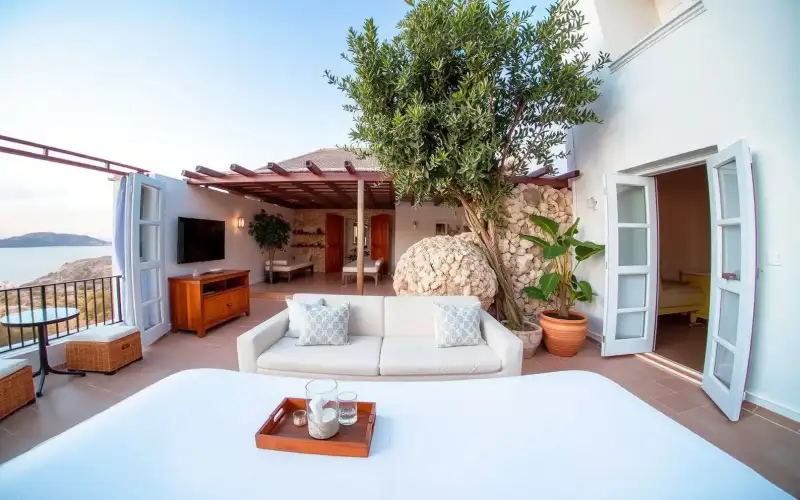
The first time I stayed at a genuinely small hotel in Paphos, the owner's mother was sitting in the courtyard shelling carob pods. She didn't work there. She just liked the courtyard. That detail — unhurried, unrepeatable, impossible to manufacture — is exactly what separates the boutique independents from the all-inclusive machines that line the coast between Coral Bay and Kato Paphos. You either care about that kind of thing or you don't. If you do, read on.
Paphos is a UNESCO World Heritage site, the mythological birthplace of Aphrodite, and — less poetically — a town that has spent the last two decades building enormous resort hotels along its seafront. The brochures for those places are very good. The pools are enormous. The swim-up bars are reliably stocked. But if you've come to Cyprus to eat kleftiko that someone actually made rather than reheated, to walk through a village that hasn't been pedestrianised for tourists, or simply to stay somewhere that feels like it belongs to the island rather than floating above it, then the boutique sector is where you need to look.
What 'Boutique' Actually Means in Paphos
The word gets stretched. A 200-room hotel with a spa and a 'curated' minibar will call itself boutique. For the purposes of this guide, I'm using a stricter definition: independently owned, under 30 rooms, and with a demonstrable connection to the local landscape — whether that's through food sourcing, partnerships with local producers, or simply an owner who has lived in the area for decades and can tell you which taverna the fishermen actually eat at.
Most of the properties that fit this description sit in one of three zones: the old town of Ktima (the upper town, away from the harbour), the villages of the Akamas hinterland — Kathikas, Droushia, Ineia — and the quieter residential streets between the archaeological park and the sea. Each zone has a different character, a different pace, and a different kind of traveller it suits.
Ktima: The Upper Town
Ktima is the part of Paphos that Cypriots actually use. The municipal market on Agoras Street opens at 6am and closes when the last stall holder decides to go home. The kafeneion on the corner of Pallados has been there since the 1950s. Boutique hotels that have set up in Ktima — converting neoclassical townhouses, or building around old carob warehouses — benefit from this texture. You're not in a tourist bubble. You're in a working town that happens to have remarkable Roman mosaics twenty minutes' walk away.
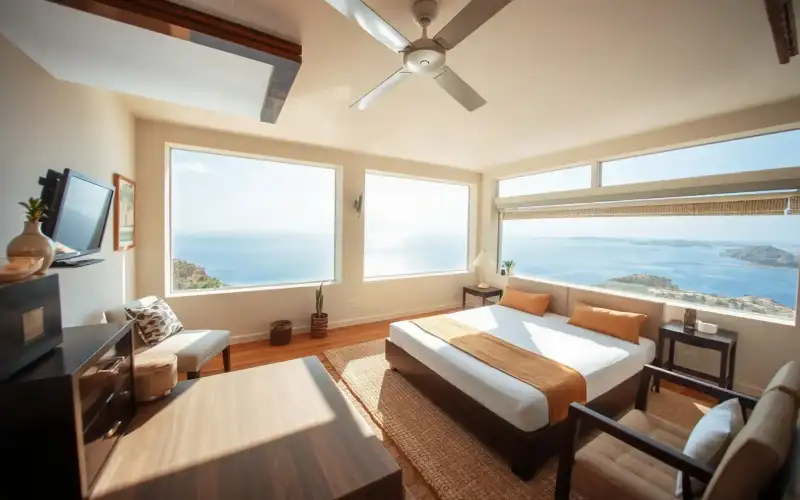
Expect rooms that are smaller than resort equivalents, but finished with considerably more thought. Exposed stone walls, locally made ceramics, linen from Lefkara. Prices in 2026 typically run from around £120 to £200 per night for a double, which is genuinely good value given what you're getting.
The Akamas Villages
Drive north out of Paphos on the B7 towards Polis and you'll start climbing almost immediately. The vineyards appear around Tsada, the air cools noticeably, and by the time you reach Kathikas — about 25 minutes from the harbour — you're at 600 metres above sea level in a village of roughly 200 people and one of the best wine-producing areas on the island. Several small guesthouses and converted village houses operate here, and the best of them have formal partnerships with the local wineries: Vasilikon, Tsangarides, and the smaller Argyrides estate, which doesn't export at all and is essentially only accessible if you know someone who knows someone — or if your hotel has made the introduction.
This is where the boutique hotel's network becomes its most tangible asset. A private tasting at a family winery, arranged through your accommodation, with the winemaker actually present, is a categorically different experience from a coach tour wine-tasting with forty other guests and a laminated menu.
The Archaeological Zone
The streets immediately surrounding the Paphos Archaeological Park — Tombs of the Kings Road, the lanes behind the lighthouse — contain a handful of small hotels that have managed the difficult trick of being genuinely quiet despite being within walking distance of the main tourist sites. These suit couples who want culture in the morning and a pool in the afternoon without the industrial scale of the Poseidon or Almyra complexes. Rates here sit slightly higher than Ktima, typically £160–£250 per night, reflecting the location premium.
What the Best Ones Actually Offer
Beyond the room itself, the distinguishing feature of a well-run boutique hotel is the programme of experiences it can arrange — and critically, whether those experiences are genuinely local or simply outsourced to the same tour operators every other hotel uses.
- Cypriot cooking classes — The best are run by local women (almost always women) in their own homes or in small village kitchens. Expect to make halloumi from scratch, learn the difference between flaounes (Easter cheese pastries) and tiropita, and spend three hours eating what you've cooked. Prices around £65–£85 per person. Your hotel should be able to introduce you directly rather than booking through a middleman.
- Private wine tours — The Paphos wine region (officially the Pafos PDO) covers the villages from Tsada up to the Troodos foothills. A private half-day tour visiting two or three estates, with a driver, typically costs £120–£160 for two people. The key word is private — you want the winemaker, not a guide reading from a script.
- Herb and foraging walks — Particularly good in spring (March to May) when the hillsides above the Akamas are covered in wild thyme, sage, and rockrose. Several local naturalists run small-group walks; the better boutique hotels have standing relationships with two or three of them.
- Boat trips to the Akamas sea caves — Easily arranged independently, but a hotel with a relationship with a specific captain means a smaller boat, earlier departure before the crowds, and the kind of local knowledge that means you actually find the caves rather than circling the headland.
- Pottery and ceramics workshops — Paphos has a small but serious craft community. One-to-one sessions with working potters in their studios, arranged through accommodation, run about £50–£70 for two hours.
The Honest Pros
Personalised service is the headline benefit, and it's real. When a hotel has 12 rooms and the owner is on site, the ratio of staff attention to guests is simply incomparable to a 300-room resort. Your dietary requirements are remembered. The taxi that picks you up from the airport knows your name before you've introduced yourself. If you mention at breakfast that you'd like to visit the Tombs of the Kings at dawn before the tour groups arrive, someone will quietly arrange it.
The food quality at owner-operated properties is consistently higher than at large hotels. Not always more elaborate — often simpler — but made with ingredients that were sourced that morning rather than delivered on a Tuesday lorry. Breakfasts at the better Ktima properties include local cheeses, fresh-pressed carob syrup, honey from the Akamas, and bread from the bakery on Makarios Avenue that opens at 5am.
"We don't have a menu as such," the owner of one Kathikas guesthouse told me, when I asked about dinner. "I cook what I bought this morning. Tonight it's rabbit stifado and whatever the garden has." The garden, it turned out, had courgette flowers, fresh oregano, and a lemon tree that was apparently having an excellent year.
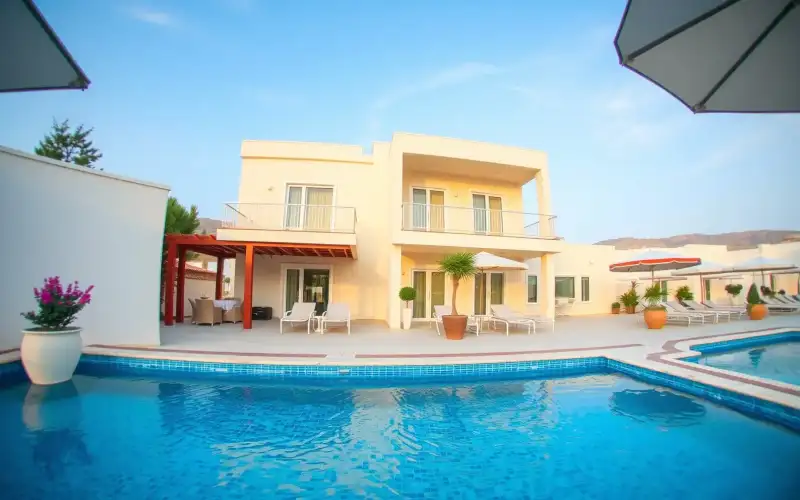
Privacy is another genuine advantage, particularly for couples. No crowded pool bars, no entertainment team with a microphone, no queue for the sun loungers. The smaller pools at boutique properties — often 8 to 12 metres, sometimes plunge pools — are rarely shared by more than six or eight people at a time.
Value, when you factor in what's included, often surprises people. A boutique hotel at £180 per night that includes a proper breakfast, a welcome bottle of local wine, and arranges a private winery visit at trade rates may represent better overall value than a resort at £140 that charges separately for everything.
The Honest Cons
Smaller pools. If you want a 50-metre lap pool or a pool complex with slides and a dedicated swim-up bar, boutique hotels in Paphos cannot help you. This is a fundamental trade-off, not a failing, but it's worth being clear about before you book.
Limited on-site facilities. No gym to speak of. Possibly a treatment room with one therapist rather than a full spa. No kids' club, no entertainment programme, no multiple restaurants. If you want the full resort infrastructure, you need a resort.
The village properties — particularly in Kathikas and Droushia — require a car. There is no meaningful public transport connecting these villages to Paphos town or the coast. The OSYPA bus network doesn't reach this far with any useful frequency. Budget for a hire car from Paphos Airport (roughly £35–£55 per day in 2026 for a small automatic) or accept that you're relying on taxis, which add up.
Availability is tight. The best boutique hotels in Paphos have between 8 and 20 rooms. They sell out, particularly between April and June and again in September and October. Booking six months ahead is not excessive for the most sought-after properties. Don't assume you can book in March for Easter week.
I've made the mistake of leaving a Paphos boutique hotel booking too late twice in the last five years. Both times I ended up in a perfectly adequate but entirely characterless chain hotel near the harbour. The lesson was obvious and I ignored it twice.
Who These Hotels Actually Suit
Couples, primarily. Not exclusively, but the combination of privacy, wine-focused experiences, and intimate dining is calibrated almost perfectly for two people who want to actually engage with each other and with the place they're visiting. Honeymoons and significant anniversary trips are a natural fit.
Solo travellers who want to connect with local life rather than sit in a resort bubble also do well in boutique properties. Owners of small hotels tend to be genuinely interested in their guests in a way that a front desk manager at a 400-room hotel simply cannot be.
Foodies. If you're the kind of traveller whose trip planning starts with restaurants and works backwards to accommodation, boutique hotels in the Paphos wine country villages are essentially designed for you. The proximity to producers, the owner-cooked dinners, the market runs — it all coheres around food in a way that no resort can replicate.
What these hotels don't suit: families with young children who need structured entertainment and shallow pool areas; large groups looking for a party atmosphere; travellers who need the reassurance of a recognised brand and standardised service levels. These are legitimate needs. The boutique sector just isn't built to meet them.
Practical Comparison: Boutique vs Resort in Paphos
| Factor | Boutique Hotel | Large Resort |
|---|---|---|
| Average room rate (2026) | £120–£250/night | £100–£350/night |
| Pool size | Small to medium (8–15m) | Large, multiple pools |
| Breakfast quality | Local, often exceptional | Buffet, variable |
| Local experience access | Direct, personalised | Outsourced, group-based |
| Advance booking required | 3–6 months minimum | 4–8 weeks usually sufficient |
| Car required | Often (village properties) | Rarely |
| Best for | Couples, foodies, solos | Families, groups, beach holidays |
Verdict
Paphos has been hosting tourists since before the Romans built their mosaics, and the island has a deeply ingrained instinct for hospitality that the large resort model tends to smooth away rather than amplify. The boutique hotels — the converted townhouses in Ktima, the stone guesthouses in Kathikas, the small whitewashed properties near the archaeological park — are the places where that instinct survives intact.
They are not for everyone. The pools are smaller, the facilities are fewer, and you need to book early and often plan around a hire car. But if you're the kind of traveller who comes back from a holiday and talks about the woman who taught you to make halloumi, or the winemaker who opened a bottle that wasn't on any list, or the rabbit stifado that appeared because the garden was having a good week — these are the hotels that make those stories possible.
For 2026, my strong recommendation is to look at the Kathikas and Droushia area first if you're visiting in spring or autumn, and the Ktima old town if you want to be within walking distance of the mosaics and the market. Either way, book early, bring a sense of curiosity, and leave the brochure at home.

Comments (5 comments)