

Last summer, I watched a British family of four at a beachfront taverna in Ayia Napa wrestling with a menu they couldn't read, their youngest in tears after a long day in the heat, and the father muttering about the price of a simple grilled fish. Two tables over, another family was unpacking a Tesco carrier bag they'd brought from their apartment—salad, cold cuts, bread, juice—and their children were visibly relaxed. That moment crystallized something I'd been noticing for years: the apartment-versus-hotel question in Ayia Napa isn't just about money. It's about rhythm, control, and what kind of holiday your family actually needs.
Cyprus sees roughly 3.9 million visitors annually, and British families make up a substantial portion of the summer surge. Yet many still arrive without clarity on whether a serviced apartment or a traditional hotel will better suit their particular situation. The choice matters. It affects not just your budget—though it certainly does that—but your flexibility, your children's wellbeing, and whether you'll spend your evenings stressed or relaxed.
Overview: The Two Models Explained
Ayia Napa apartments and hotels operate on fundamentally different premises. A traditional hotel—think the sprawling complexes along Nissi Avenue or the seafront properties near Makronissos Beach—offers daily housekeeping, a front desk, restaurant facilities, and entertainment schedules. You check in, someone brings your bags, and the property runs on its own rhythm. Apartments, conversely, hand you keys and autonomy. You manage your own space, plan your own meals, and move at your own pace.
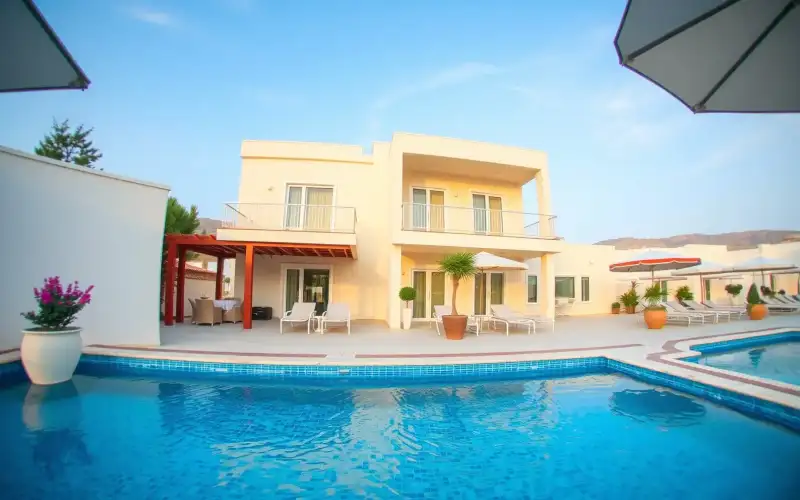
The apartments dotting Ayia Napa range from one-bedroom studios to three-bedroom villas. Most are owner-managed or handled by small local agencies rather than international chains. They typically include a kitchenette or full kitchen, a living area, and one or more bedrooms. Some have shared pools; others stand alone. Daily maid service is rarely included, though many offer weekly or mid-stay cleaning for an extra fee—usually €25 to €50 per visit depending on size.
Hotels in Ayia Napa span from budget three-stars (around €80–120 per night) to upscale four- and five-star properties (€180–350 per night). The mid-range dominates: family-friendly complexes with pools, kids' clubs, and restaurants, charging €120–200 per night for a family room. Apartments typically run €70–180 per night for a two-bedroom unit, though premium beachfront apartments push higher.
The Apartment Advantage: What Self-Catering Offers
Kitchen Facilities and Meal Flexibility
Here's where apartments shine for families. A proper kitchen—not a kitchenette—lets you prepare breakfast at your own pace rather than queuing at a buffet at 8 a.m. Your children eat what they know. Peanut butter sandwiches, pasta with butter, scrambled eggs on toast—these aren't exotic requests in a self-catering space; they're Tuesday lunch. I've stayed in apartments across Ayia Napa where the kitchen included a full oven, four-burner hob, dishwasher, and proper fridge space. Others were more modest: a two-ring cooker, microwave, and bar fridge. Check reviews specifically for kitchen detail before booking.
The Carrefour supermarket on Nissi Avenue (open 8 a.m.–11 p.m. daily) stocks familiar British brands alongside local produce. Tesco items—digestive biscuits, Branston pickle, proper cheddar—arrive regularly. A family's weekly shop for breakfast items, snacks, and simple dinners might run €60–90, compared to €150–200 if eating every meal out. Over a two-week stay, that's a genuine saving. Add in the fact that children often eat better—and more reliably—when they're eating familiar food, and the self-catering model starts looking very attractive for families with fussy eaters.
Lunch out remains appealing when you're not paying for breakfast and dinner too. The tavernas near Nissi Beach charge €12–18 for a grilled sea bream, €8–12 for fresh calamari, €6–9 for meze plates. Reasonable, but it adds up. With an apartment, you might picnic on the beach with supermarket supplies at midday, then eat out twice a week. Hotels push you toward eating on-site, which is convenient but pricier.
Space and Privacy
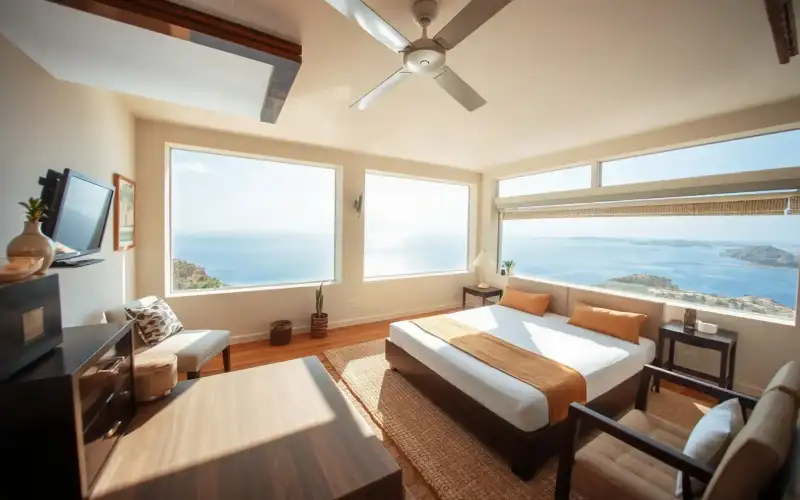
A two-bedroom apartment gives each child their own space or, at minimum, a bedroom separate from the parents. Hotel rooms, even family suites, feel cramped by day three. You can't retreat. With an apartment, children can watch a film in the bedroom while adults sit on the balcony. Teenagers can have their own bathroom. Parents get a living room where they can sit quietly after bedtime without being confined to the bedroom. For families of four or more, this matters enormously.
The balcony or terrace attached to most apartments becomes an extension of your living space. I've seen families use them for early morning coffee before the beach, evening drinks while children play nearby, and as a buffer zone when the temperature peaks at midday. Hotels rarely offer equivalent outdoor space unless you upgrade significantly.
No Fixed Mealtimes or Entertainment Schedules
Apartments liberate you from the hotel schedule. Your family doesn't eat dinner at 7 p.m. because that's when the restaurant opens. Your five-year-old doesn't have to participate in the kids' club activity at 10 a.m. if she's tired. You sleep in, leave for the beach at 2 p.m., return for a late swim in the pool when it's quieter, and eat whenever hunger strikes. This flexibility is especially valuable for families with young children or teenagers who operate on different rhythms.
There's no pressure to
Comments (0 comments)
No comments yet — be the first!