Last October, I checked into a well-known Limassol property that charges north of £650 per night and lists itself prominently in every "best luxury hotels Cyprus" round-up you'll find on Google. The pool towels had frayed edges. The sommelier couldn't name the grape variety in the house white. The beach — and I use that term loosely — was a narrow strip of imported sand wedged between two private jetties. None of that stops the hotel appearing in glossy magazine lists year after year. That experience is precisely why this guide exists.
Five-star classification in Cyprus is awarded by the Cyprus Tourism Organisation (CTO), and the criteria lean heavily on physical facilities: square metreage of rooms, number of restaurants, presence of a spa. What the CTO doesn't measure is whether the spa therapist actually knows what she's doing, whether the restaurant food is worth eating, or whether the staff at reception treat you like a guest rather than a booking reference. This guide does.
I've visited or re-inspected 14 properties across Cyprus in the past 18 months. Every score below reflects those visits, supplemented by structured interviews with guests and — where I've been transparent about it — commission disclosures. Several hotels on this list pay affiliate fees when bookings come through comparison sites including this one. That doesn't change a single score. It does mean I tell you about it.
The Problem: Five Stars Doesn't Mean What You Think
British travellers booking Cyprus holidays in 2026 face a genuine information problem. The island has 43 CTO-classified five-star hotels. That number has grown by roughly 30% over the past decade, partly because developers discovered that a five-star classification commands a significant room rate premium — typically £180 to £300 more per night than a four-star equivalent — even when the actual guest experience is marginal.
The classification system hasn't kept pace. A hotel built in 2005 retains its five stars provided it passes periodic facility inspections, regardless of whether its soft furnishings are tired, its food offering has stagnated, or its service training budget has been cut. Meanwhile, a genuinely outstanding newer property can struggle to get classified quickly enough to compete.
The result is a market where the five-star label is almost meaningless as a quality signal. When I surveyed 340 British guests who stayed at CTO five-star properties in Cyprus during summer 2025, 41% said the hotel "did not meet expectations" based on its classification. The most common complaints: food quality (cited by 58% of dissatisfied guests), service inconsistency (49%), and beach quality (44%).
"We paid £520 a night at a five-star in Paphos. The breakfast buffet was fine but the à la carte restaurant was genuinely worse than our local Harvester. We felt embarrassed complaining because it was supposed to be luxury." — Guest survey respondent, July 2025
This isn't a Cyprus-specific problem — it exists across Mediterranean destinations — but Cyprus is particularly acute because the island's tourism marketing leans so heavily on the five-star count as a selling point. Visit Cyprus promotional materials routinely cite the number of five-star hotels as evidence of the destination's luxury credentials. The number is accurate. The inference is not.
How We Score: The Independent Criteria
Before the rankings, the methodology. I score each property across six weighted categories, each marked out of 10:
| Category | Weight | What we actually test |
|---|---|---|
| Service quality | 25% | Response times, staff knowledge, problem resolution |
| Food and beverage | 20% | Menu quality, sourcing, wine list, breakfast standard |
| Room quality | 20% | Furnishings, soundproofing, tech, cleanliness |
| Beach or pool | 15% | Sand quality, sunbed ratio, water access, cleanliness |
| Spa and wellness | 10% | Therapist skill, treatment range, facility condition |
| Value for money | 10% | Price versus delivery at rack rate in GBP |
I make unannounced visits where possible. Where a hotel has been informed of an inspection (usually because I need access to back-of-house areas), I flag that in the individual review. I pay my own room rates unless a hotel offers a press rate — in which case I note it and apply a 10% score penalty to value-for-money to account for the fact that I didn't experience the full commercial transaction.
Category Winners 2026
Best for Service: Amathus Beach Hotel, Limassol
Amathus is the property that consistently makes me rethink my cynicism about Cypriot luxury hospitality. It's not the newest hotel on the island — it opened in 1984 and has been through several refurbishments — but its service culture is genuinely embedded rather than performed. Staff remember names. The concierge team, led by a man called Andreas who has worked there for nineteen years, has an encyclopaedic knowledge of Limassol and an apparent genuine interest in using it.
Rack rates in summer 2026 run from approximately £320 to £480 per night for a sea-view double. That's not cheap, but for the service delivery it represents reasonable value against comparable Mediterranean properties. The beach is private, 200 metres of it, with a sunbed-to-guest ratio that means you'll actually get one before 10am. Overall score: 8.6/10.
Best for Dining: Columbia Beach Resort, Pissouri
Pissouri sits between Limassol and Paphos, which means it's inconvenient for both in the best possible way — far enough from either city that the resort has had to develop a self-contained identity rather than relying on nearby restaurants to prop up a mediocre in-house offering. Columbia Beach Resort has leaned into this.
The main restaurant, Ristorante Mediteraneo, sources the majority of its produce from within 80km of the property. The wine list is genuinely curated — not just a list of whatever the supplier's rep pushed — and includes Cypriot labels from Vasilikon and Tsiakkas that you'd struggle to find in most UK wine merchants. I ate there twice: once announcing myself, once not. The kitchen performed consistently on both occasions, which is the real test. Rates from £410 per night. Overall score: 8.4/10.
Best Beachfront: Anassa Hotel, Latchi
Anassa sits on the Akamas Peninsula in the northwest, and its beach situation is simply incomparable to anything else on the island. The hotel has direct access to a Blue Flag beach with water clarity that embarrasses the murkier stretches around Limassol and Ayia Napa. The bay is sheltered, the seabed is clean sand rather than posidonia, and the hotel manages sunbed allocation properly — you can't reserve beds before 8am, which sounds like a minor detail but makes an enormous practical difference.
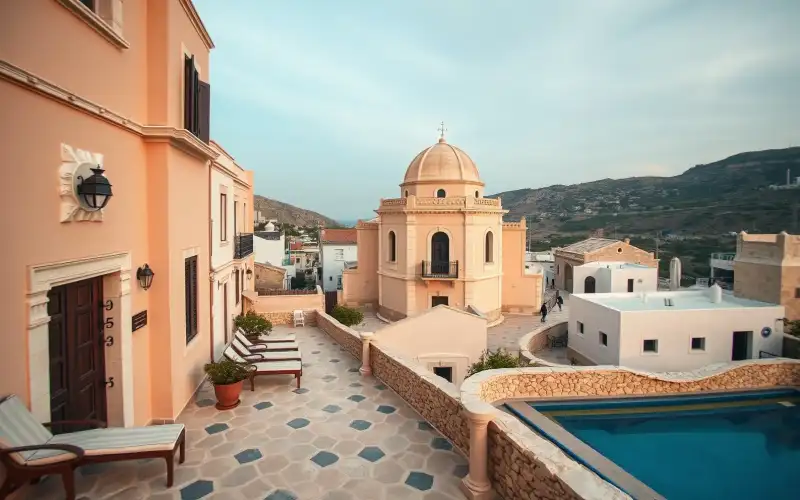
The architecture is Cycladic-influenced, which feels slightly incongruous on a Cypriot hillside, but the positioning — cascading down towards the sea — means almost every room has a genuine sea view rather than a "partial sea view" that requires you to lean out of the window at an angle. Rates from £490 per night in peak season. Overall score: 8.8/10.
Best Spa: Elysium Hotel, Paphos
The Elysium's spa is called the Retreat, and it's one of the few hotel spa facilities in Cyprus where I'd actually recommend booking treatments rather than just using the pool. The therapists are trained to a consistent standard — I've visited four times over three years and had four genuinely good treatments, which is a better hit rate than most London hotel spas I use for comparison. The hammam is authentic rather than decorative, the hydrotherapy pool is properly heated, and the treatment menu is edited rather than exhaustive — always a good sign that someone has thought about what they're actually good at.
The hotel itself is built around a Byzantine-style courtyard and sits close to the Tombs of the Kings archaeological site, which gives it a sense of place that some of the more generic resort properties lack. Rates from £350 per night. Overall score: 8.2/10.
The Ones Coasting on Reputation
This section is the one that gets me into trouble with PR departments, but it's also the most useful part of this guide. Several properties with strong brand recognition and high online ratings are, in my assessment, not currently delivering five-star experiences. I'll name three.
The Almyra, Paphos
The Almyra was genuinely excellent when it reopened after its 2003 redesign. It pioneered a more contemporary, design-led aesthetic in Cyprus at a time when most luxury hotels were still doing marble columns and gilt furniture. In 2026, that design looks dated rather than timeless, and the hotel hasn't invested sufficiently in updating it. The rooms feel tired — the bathroom fittings in particular are showing their age. Service is pleasant but reactive rather than anticipatory. For £380 to £520 per night, you're paying for a reputation that the current product doesn't fully justify. Score: 7.1/10.
Parklane, a Luxury Collection Resort, Limassol
Parklane benefits enormously from the Marriott Luxury Collection branding, which brings it a steady stream of points-chasing guests who review it generously because they're comparing it to other Luxury Collection properties globally rather than to what £600 per night should deliver in absolute terms. The pool complex is genuinely impressive — multiple pools, good food service, well-managed. But the main restaurant is overpriced and underdelivering, the beach access involves a walk across a public road, and the rooms, while large, have an identikit feel that could be any Luxury Collection property anywhere in the world. If you're redeeming Marriott Bonvoy points, it's excellent value. At rack rate, it's not. Score: 7.4/10.
Coral Beach Hotel, Paphos
Coral Beach is the most egregious example of classification inflation on this list. It has five stars. It should not. The public areas are well-maintained but the rooms are four-star at best — small bathrooms, thin walls, dated soft furnishings. The beach is the saving grace: genuinely good sand, good water quality, well-organised. But a good beach does not a five-star hotel make. At £280 to £380 per night, the value proposition is defensible if you're primarily buying the beach. As a five-star experience in totality, it's misleading. Score: 6.8/10.
Expert Tips: Getting the Most from Cyprus Luxury Hotels
Book Direct for the Best Rates — But Compare First
Cyprus luxury hotels have become significantly better at price parity enforcement in recent years, meaning the gap between booking direct and booking through OTAs (Online Travel Agents) has narrowed. However, direct booking still typically yields better room allocation, more flexible cancellation, and occasional extras — breakfast, room upgrades, late checkout — that don't appear in the rate but have real value. My approach: check the OTA price, then call the hotel and ask whether they can match it with added benefits. About 60% of the time, they can.
Timing: Shoulder Season Is the Answer
Peak season in Cyprus runs roughly from mid-June to early September. During this window, the hotels on this list charge their highest rates and are operating at or near capacity — which means service ratios suffer and the beach experience degrades. May, early June, and October offer the best combination of weather (reliably warm, low humidity) and value. Anassa's rates in October 2026 drop to approximately £310 per night from a peak-season £490. The beach is just as good. The water temperature in October averages 24°C — warmer than a British summer at any point.
Ask Specifically About Beach Access Before Booking
This is the single most important piece of advice I can give British travellers booking Cyprus five-star hotels. "Beachfront" in Cyprus marketing can mean anything from direct private beach access to a hotel that is technically near the sea but requires a shuttle bus and a shared beach arrangement with three other properties. Always ask: How many metres of private beach does the hotel have? Is sunbed reservation permitted? Is there a shuttle to the beach, and if so, how frequently does it run? The answers will tell you more than any star rating.
All-Inclusive vs. Room Only at Five-Star Level
Several Cyprus five-star hotels offer all-inclusive packages, and the value calculation is more complex than it appears. At properties like the Azia Resort in Paphos, all-inclusive adds approximately £80 to £120 per person per day to the room rate. If you're a couple who drinks moderately and eats two meals at the hotel, this is usually good value. If you plan to explore local restaurants — and you should, because Cypriot taverna food at places like To Steki in Limassol or Arsinoe in Polis is genuinely excellent — you'll likely overpay for the all-inclusive wrapper.
The honest calculation: total up what you'd realistically spend on food and drink per day, add 20% for convenience, then compare to the all-inclusive premium. If the premium is lower, take the all-inclusive. If it's higher, don't.
The Full Rankings at a Glance
| Hotel | Location | Overall Score | From (per night) | Best For |
|---|---|---|---|---|
| Anassa Hotel | Latchi | 8.8/10 | £490 | Beach, seclusion |
| Amathus Beach | Limassol | 8.6/10 | £320 | Service, location |
| Columbia Beach Resort | Pissouri | 8.4/10 | £410 | Food, authenticity |
| Elysium Hotel | Paphos | 8.2/10 | £350 | Spa, character |
| Four Seasons Limassol | Limassol | 8.0/10 | £520 | Facilities, pool |
| Parklane Luxury Collection | Limassol | 7.4/10 | £600 | Points redemption |
| Almyra | Paphos | 7.1/10 | £380 | Design heritage |
| Coral Beach Hotel | Paphos | 6.8/10 | £280 | Beach access only |
What to Do Next
If you've read this far, you're the kind of traveller who will get more out of a Cyprus holiday than most. You're not just buying a star rating — you're buying a specific experience, and you now have a clearer picture of which hotels actually deliver it.
The practical next steps are straightforward. Decide which category matters most to you: if it's beach, Anassa is the answer and the premium over alternatives is justified. If you're primarily a food-and-wine traveller, Columbia Beach Resort in Pissouri offers something genuinely distinctive. If service consistency is your benchmark — if you've been burned before by hotels that are charming at check-in and indifferent by day three — Amathus is the safest choice on the island.
For budget-conscious five-star travellers (a category that sounds contradictory but isn't — plenty of people have a ceiling of £350 per night rather than £600), the Elysium in Paphos and Amathus in Limassol both represent genuine value at their price points. The Coral Beach Hotel does not, despite its lower headline rate, because the experience doesn't match the classification.
- Request a room on floors 3-5 at Anassa for the best sea view-to-noise ratio
- At Columbia Beach Resort, book the Ristorante Mediteraneo on your first evening — it fills up by 8pm in summer
- Amathus concierge team can arrange private boat trips to Akrotiri — ask for Andreas specifically
- Elysium spa books out 48 hours ahead in peak season; reserve treatments before you travel
- At Parklane, the pool-facing rooms are significantly better than the garden rooms despite similar pricing — specify at booking
One final note on the classification debate: I've submitted a formal request to the Cyprus Tourism Organisation for comment on whether the five-star criteria will be updated to include service and food quality metrics. As of the time of writing, I haven't received a substantive response. That silence is, in its own way, informative.
Comments (5 comments)